A broken storefront window can turn a normal business day into a safety issue in seconds. Flying glass, exposed entry points, cleanup, downtime, and worried staff all create costs that go well beyond replacing a pane. This commercial safety film review looks at where professionally installed safety film delivers real value, what it can and cannot do, and how to choose a solution that suits your building.
Commercial safety film is a clear, heavy-duty window film applied to the interior surface of existing glass. Its primary role is to help hold shattered glass together after impact. That can reduce dangerous debris from accidental breakage, vandalism, severe weather, or attempted forced entry. For offices, retail spaces, schools, clinics, hospitality venues, and strata-managed buildings, it is a practical upgrade that improves protection without changing the look of the property.
What Commercial Safety Film Actually Does
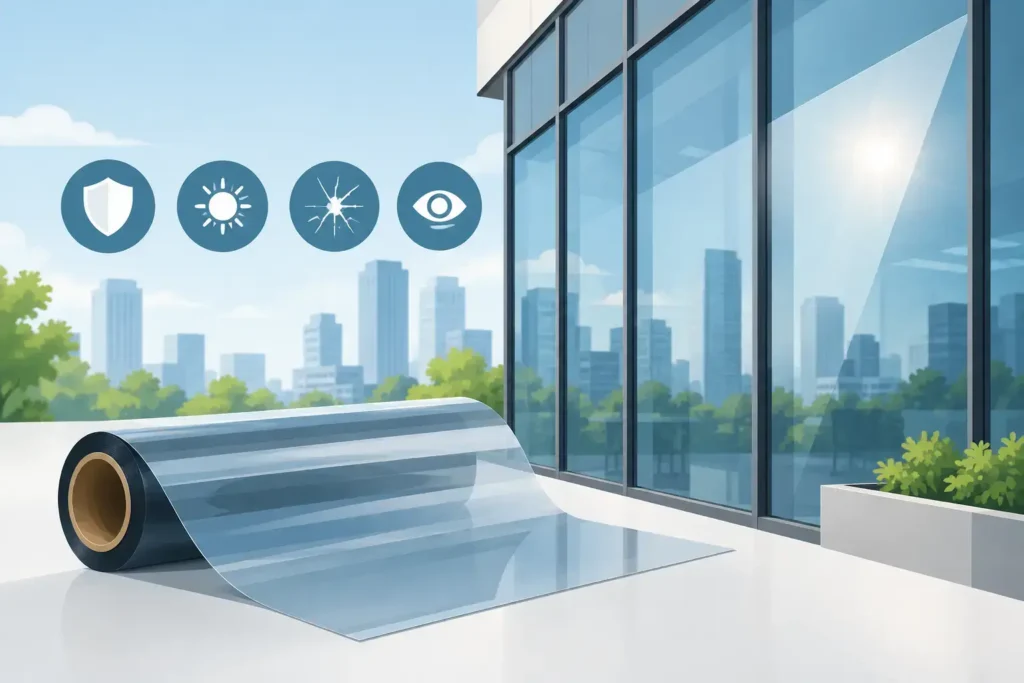
Standard window glass is strong in normal conditions, but once it breaks, the pieces can scatter widely. Safety film adds a resilient layer that bonds to the glass and helps retain fragments in place. Instead of falling or flying freely into the room, much of the broken glass remains attached to the film.
That difference matters most around high-traffic areas. Think street-facing shopfronts, glazed entry doors, internal partitions, meeting rooms, reception areas, and windows near walkways. A glass breakage event in one of these locations can create an immediate injury risk and disrupt operations. Safety film helps make the outcome more manageable while replacement glass is arranged.
The film can also make a window more difficult to breach quickly. It does not make glass indestructible, and it should never be sold as a substitute for security shutters, laminated glass, alarms, or access control where those measures are needed. However, by holding broken glass together, the film may delay entry and create valuable time for staff, security teams, or emergency response.
Commercial Safety Film Review: The Benefits That Matter
The strongest reason to install safety film is occupant protection. When glass fails, minimizing loose shards can help protect employees, customers, visitors, and contractors. This is especially relevant for businesses with public-facing premises or workplaces where people spend long periods near large areas of glazing.
Business continuity is another meaningful benefit. A damaged window still requires professional replacement, but retained glass fragments can make the space safer to secure and clean. Less scattered debris can mean less disruption to a reception area, retail floor, office, or lobby.
For many properties, safety film also offers a more discreet option than bars, shutters, or visibly fortified glass. Clear film preserves the natural light and open appearance that modern commercial spaces rely on. Tinted or solar-control safety film options may also reduce glare, heat, and UV exposure, depending on the product selected. That can be useful for offices with strong afternoon sun, display windows, and customer areas where comfort affects the daily experience.
There is a trade-off. Thicker films designed for greater glass retention may cost more than basic solar or privacy film, and the right product depends on the glass type, frame condition, exposure, and risk level. The best result comes from matching the film to the problem rather than choosing the thickest option by default.
Where Safety Film Makes the Most Sense
Not every window carries the same risk. A professional assessment should focus on how the glass is used, who is nearby, and what happens if it breaks.
Street-level retail glass is a common priority. Shopfronts are exposed to accidental impacts, vandalism, and attempted break-ins, while staff and customers may be standing only a few feet away. Safety film helps retain broken glass and can make a damaged storefront less immediately vulnerable.
Office buildings often benefit from safety film on entry doors, sidelights, internal glass walls, and windows around busy work areas. Glass partitions bring light into a workplace and support a polished fit-out, but they should be considered carefully where people move equipment, open doors frequently, or work close to the glazing.
Schools, medical practices, gyms, restaurants, and hotels also have clear reasons to consider film. These environments may have high foot traffic, children, patients, guests, or members of the public moving through shared areas. A safety-focused glass solution can support a more considered approach to facility management.
For property managers, safety film can be particularly valuable across multiple suites or common areas. Applying a consistent solution to vulnerable glazing may be more practical than replacing large quantities of otherwise functional glass. It is often a cost-conscious way to improve an existing building without undertaking a major renovation.
What to Check Before You Choose a Film
A credible recommendation starts with the glass, not a sales pitch. Different glazing systems respond differently to film, and the installation method should suit the specific application. Tempered glass, annealed glass, insulated glass units, laminated glass, and older panes may each require a different approach.
Ask whether the proposed film is intended for safety, security, or both. These terms are often used together, but they are not identical. Safety film is generally focused on reducing hazardous glass fragmentation. Security-oriented solutions may be thicker, may use attachment systems, and may be specified to provide greater resistance to forced entry. The right choice depends on your objective.
It is also worth asking how the edges will be finished. In higher-risk applications, an attachment system may be recommended to help keep filmed glass within the frame after breakage. This can be an important detail, particularly for larger windows and exterior storefront systems. A quality installer should explain whether it is necessary, why it is being recommended, and what performance expectations are realistic.
Appearance matters, too. Clear safety film is often the preferred option when maintaining visibility is the priority. If privacy, glare, or solar heat are also concerns, there may be a suitable combination film. Be aware that darker or reflective finishes can alter exterior appearance and daylight levels. A sample applied to the actual glass can help avoid surprises.
Why Professional Installation Changes the Result
Safety film only performs as intended when it is properly selected, prepared, and installed. Commercial glass often has silicone edges, seals, decals, old adhesive residue, difficult access, or large panels that require precise handling. Poor surface preparation, contamination, lifted edges, and rushed trimming can affect both appearance and long-term performance.
An expert installation team will inspect the glass, identify potential compatibility concerns, and prepare the surface carefully before applying the film. The goal is a clean, consistent finish with properly finished edges and no unnecessary visual distortion. For occupied workplaces, scheduling also matters. Professional installers can plan the work around trading hours, staff access, customer movement, and sensitive areas of the building.
Premium materials are equally important. Commercial film should be selected for its intended purpose, durability, optical clarity, and manufacturer-backed performance. A low-cost film may look acceptable at first, but premature peeling, haze, discoloration, or adhesive failure can undermine the investment and create a poor impression in customer-facing spaces.
Safety Film Is Not a One-Size-Fits-All Security Plan
Safety film is highly useful, but it works best as part of a wider property protection strategy. A busy retail storefront may also need quality locks, alarm monitoring, exterior lighting, and clear emergency procedures. A facility exposed to high-impact risks may require upgraded glazing rather than film alone. For some compliance-driven projects, building codes, insurance requirements, and local regulations should be reviewed before work begins.
This is where tailored advice has real value. A small office with an internal glass partition has different needs from a ground-floor retailer, a medical center, or a large corporate lobby. The most cost-effective solution is the one that addresses the actual risk without paying for performance your property does not need.
The Bottom Line for Business Owners
A good commercial safety film review should not promise that a thin layer of film solves every glass-related risk. What quality safety film can do is meaningful: it can help retain dangerous fragments, support a safer environment, add delay during a break-in attempt, and preserve the clean appearance of existing glazing.
For businesses that want practical protection without replacing functional windows, professional safety film is a smart option to assess. Start with the glass your people use every day, consider the risks around it, and choose a premium solution installed for the way your business actually operates.