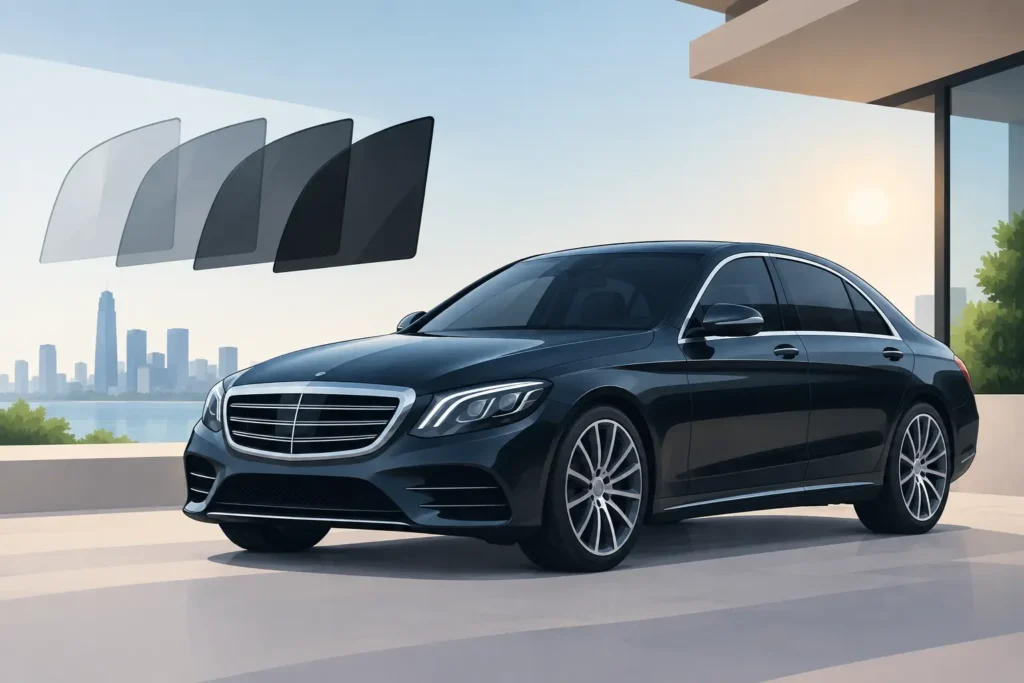
A luxury sedan should feel calm the moment the door closes. But leather that is hot to the touch, glare across the dashboard, and a cabin that takes too long to cool can take away from that experience. The best tint for luxury sedans does more than darken the glass. It manages heat, protects refined interior materials, adds privacy, and complements the vehicle’s original design.
For premium vehicles, film selection is less about choosing the darkest shade and more about matching performance, appearance, and local tint requirements. A high-quality installation should look intentional and factory-finished, not like an afterthought.
Best Tint for Luxury Sedans: Ceramic Film Leads
For most luxury sedan owners, premium ceramic window film is the strongest all-around choice. Ceramic films use non-metallic, non-dyed technology to reject a significant amount of solar heat while helping block UV exposure and reduce glare. The result is a cooler, more comfortable cabin without the overly reflective appearance that can clash with an executive sedan.
This matters in vehicles with large windscreens, panoramic roofs, black leather, and expansive rear glass. Luxury interiors use materials worth protecting, from supple leather and wood trim to screens, stitching, and rear-seat finishes. Quality film helps reduce the sun exposure that can contribute to fading, drying, and premature aging.
Ceramic tint is also a practical fit for modern vehicles because it does not rely on metal layers. That helps avoid interference concerns with mobile reception, GPS, Bluetooth, keyless entry, and other connected features. While performance differs by film range and shade, ceramic technology is generally the premium option for drivers who want heat rejection without sacrificing the clean look of their glass.
Choose Heat Rejection Before Darkness
A common mistake is judging tint solely by how dark it looks. Visible light transmission, often called VLT, describes how much visible light passes through the glass and film. A lower VLT creates a darker appearance, but darkness alone does not determine how effectively a film controls heat.
A lighter ceramic film can outperform a darker basic dyed film when it comes to solar heat rejection and UV protection. This gives luxury sedan owners useful flexibility. You may prefer a light, elegant tint on a silver or white sedan, yet still want meaningful comfort improvements during hot weather. On a black or charcoal vehicle, a medium shade may create a more private, tailored appearance while retaining good outward visibility.
The right shade depends on how and when you drive. If the vehicle is used for commuting, school runs, or frequent nighttime travel, clarity through the side and rear windows should carry real weight. If it regularly carries passengers or is parked in exposed areas, a slightly darker legal shade can add privacy and reduce the feeling of being on display.
Before installation, confirm the tint rules that apply where the vehicle is registered and driven. Tint limits can vary by location and by window, particularly for front side windows and windshields. A professional installer can recommend compliant options that deliver the finish and performance you want without creating an avoidable problem at inspection time.
A balanced luxury-sedan setup
For many sedans, the most refined result is not one uniform dark shade across every window. A balanced approach often uses a legally appropriate, lighter front-side film paired with a coordinated medium shade on the rear doors and back glass. This keeps the car visually cohesive while supporting driver visibility and rear-passenger privacy.
The windshield deserves special care. In many areas, only a clear UV-protective film or a limited upper strip is permitted. A clear high-performance film can still reduce UV exposure and some infrared heat without changing the windshield’s appearance or compromising safe visibility.
Match the Film to the Car’s Character
The best film should enhance a luxury sedan’s styling, not overpower it. A deep black film can look striking on certain vehicles, but it is not always the most sophisticated choice. Excessively dark glass can hide the vehicle’s cabin design, make night driving more demanding, and create a contrast that feels less premium than a subtle, consistent finish.
Consider the factory glass color, paint, wheel finish, and interior trim. Neutral charcoal films tend to suit a wide range of luxury sedans because they look crisp from the outside and maintain natural color perception from within. Premium films are also designed to resist the purple discoloration, bubbling, and uneven fading that can make a well-kept vehicle look neglected.
There are situations where a specialty option makes sense. Owners who prioritize privacy may prefer a darker rear section. Drivers dealing with intense sun exposure may place maximum heat reduction first. Those who want nearly unchanged glass may choose a clear ceramic film for protection with minimal visual change. There is no single shade that suits every vehicle, but there is usually a clear best fit once the priorities are understood.
Why Professional Installation Matters on a Premium Vehicle
Luxury sedans have complex glass shapes, fine interior finishes, cameras, sensors, defroster lines, and tight weather seals. Film installation requires more than cutting material to size. Preparation, precise pattern cutting, careful edge work, and clean fitting all affect the final result.
A professional installation helps avoid visible contamination, crooked edges, lifted corners, gaps around dot-matrix sections, and damage caused by careless work near trims or electronics. The goal is a flawless finish that looks as though it belongs on the vehicle from day one.
Premium materials also need to be matched to the job correctly. The film selected for a rear windshield with defroster lines may differ from what works best on front doors or a panoramic roof. An experienced team can explain the trade-offs in plain language, recommend a suitable shade, and make sure each piece is installed with close attention to detail.
At Prestige Tinting, recommendations are built around the vehicle, the driver’s needs, and the finish they expect. That means considering comfort, privacy, heat exposure, and long-term appearance together rather than simply selling the darkest available film.
Protecting the Tint After Installation
Freshly installed film needs time to cure. During that period, minor haze or small water pockets can appear as moisture evaporates from beneath the film. This is usually temporary, so follow the installer’s advice before rolling down windows or judging the final clarity.
Once cured, clean tinted glass with a soft microfiber cloth and an ammonia-free glass cleaner. Avoid abrasive pads, sharp tools, and harsh chemicals around film edges. With quality materials and sensible care, a professionally installed tint can continue protecting the cabin and improving comfort for years.
The Right Choice Should Feel Effortless
The best result is one you notice without having to think about it: a cabin that stays more comfortable, a dashboard with less glare, protected interior surfaces, and glass that looks perfectly suited to the car. Choose a premium ceramic film, select a shade that supports both style and visibility, and trust skilled installation to deliver the refined finish your luxury sedan deserves.
Frequently Asked Questions
1. What is the best tint for a luxury sedan?
Premium ceramic window film is generally the best all-around option because it provides heat rejection, UV protection, glare reduction, and privacy while maintaining a clean, non-reflective appearance.
2. Does darker tint reject more heat?
Not necessarily. Tint darkness is measured by VLT, while heat rejection depends on the film’s technology and construction. A lighter ceramic film can provide better heat control than a darker basic dyed film.
3. What tint shade is best for a luxury sedan?
The ideal shade depends on your vehicle’s design, privacy needs, driving habits, and local regulations. A lighter front-side shade with a coordinated medium rear shade often provides a balanced combination of style, visibility, and privacy.
4. Can ceramic tint be applied to the windshield?
In many locations, clear ceramic film may be permitted on the windshield for UV and heat protection, while darker films may be restricted. Always check the applicable local tint regulations before installation.
5. How should I care for newly installed window tint?
Allow the film to cure according to the installer’s instructions before rolling down windows or cleaning the glass. After curing, use a soft microfiber cloth and ammonia-free cleaner, avoiding abrasive materials and harsh chemicals.