Privacy glass is often requested for one simple reason: people want to enjoy their space without feeling exposed. Whether it is a street-facing living room, a glass office partition, a parked vehicle, or a boat at the marina, the right glass treatment can create privacy while improving comfort and appearance.
The best result is not always the darkest option. Privacy needs change with the setting, the direction of the glass, available lighting, and how much natural light you want to retain. A professional recommendation helps balance privacy, heat control, glare reduction, and a finish that suits the property or vehicle.
What Privacy Glass Can Mean
Privacy glass can refer to factory-tinted glass, frosted or decorative glass, or professionally installed window film designed to limit visibility through a window. Each option creates a different effect, so it is worth starting with the outcome you want rather than choosing a film by appearance alone.
Tinted film is commonly used on vehicle windows and can also suit homes, offices, and boats. It reduces the ability to see into a space during daylight while maintaining an outward view. Depending on the film selected, it can also reduce glare, filter UV exposure, and lessen solar heat entering through the glass.
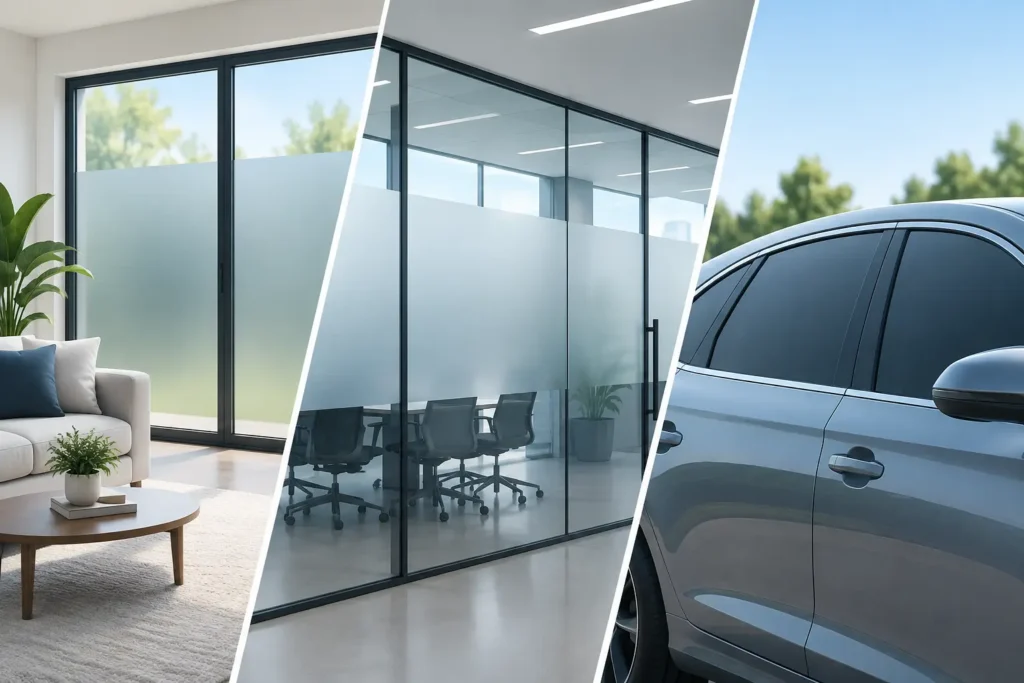
Frosted and decorative window films work differently. They obscure the view from both sides while allowing light to pass through, making them an excellent choice for bathroom windows, entry sidelights, meeting rooms, treatment rooms, and interior glass partitions. They provide consistent privacy without making the room feel closed in.
There are also specialty films that combine a privacy effect with safety or solar-control benefits. The right choice depends on how the glass is used and what matters most: daytime privacy, all-day obscurity, a clear outward view, heat reduction, or a more refined visual finish.
Privacy Glass for Homes
Large windows make a home feel open, but they can also leave bedrooms, living areas, and street-facing rooms exposed. Curtains and blinds solve part of the problem, yet they often block daylight and require constant adjustment. Window film gives homeowners a more permanent way to improve privacy while preserving a brighter interior.
For rooms that need complete visual separation, frosted film is usually the strongest option. It is particularly effective on bathroom glass, front-door panels, laundry windows, and internal doors. Modern frosted films can look clean and understated, or they can be cut into bands, patterns, and custom designs that complement the home.
For living spaces with a view, a tinted or reflective privacy film may be a better fit. During the day, it can reduce visibility from the outside and soften harsh sunlight without covering the glass. This is especially valuable on windows facing busy sidewalks, neighboring properties, pools, or outdoor entertaining areas.
There is one practical limitation homeowners should understand. Most reflective and tinted films offer stronger privacy on the brighter side of the glass. During the day, the outside is typically brighter, so people outside see more reflection while those inside retain their view. At night, when indoor lights are on, the effect can reverse. If nighttime privacy is essential, combine tinted film with blinds, curtains, or a frosted treatment in the areas that need it.
Privacy film can also help protect the features that make a home feel finished. Many premium films reduce UV exposure, helping limit fading on flooring, furnishings, artwork, and window-side fabrics. Solar-control films can reduce hot spots near windows and lessen the strain placed on air conditioning during warmer months.
Choosing the Right Home Finish
A dark film is not automatically the best privacy choice. Very dark shades can change the appearance of the façade and reduce light more than expected. A lighter neutral film may deliver the balance a homeowner wants, while a frosted finish can be reserved for specific areas where privacy is non-negotiable.
Before installation, consider the room’s purpose, its orientation, the surrounding view, and the existing window type. An expert team should assess the glass and recommend a compatible premium material rather than applying a one-size-fits-all product.
Office Privacy Glass Without Closing Off the Space
Glass is a defining feature in many modern workplaces. It brings daylight through the floor plan and creates a clean, professional appearance. The challenge is that clear glass does little to support confidential conversations, focused work, or a sense of personal space.
Privacy glass solutions allow offices to keep the benefits of glass while making each zone work harder. Frosted film is a popular choice for boardrooms, executive offices, meeting rooms, reception areas, and internal partitions. It can obscure the whole panel or cover only part of it, leaving clear sections for an open, contemporary look.
This partial coverage is useful where staff need privacy while retaining visibility for safety and wayfinding. Horizontal bands, branded patterns, and subtle geometric designs can define meeting spaces without turning them into closed rooms. The result is practical and polished rather than temporary or makeshift.
For offices with large exterior windows, solar and privacy films can help reduce glare on screens and improve comfort at desks near the glass. This is not only about appearance. Harsh afternoon light can make workstations difficult to use, while excess heat can create uneven temperatures across the office.
A professional installation also matters in customer-facing settings. Bubbling, uneven edges, and poorly aligned patterns can undermine an otherwise high-quality fit-out. Premium materials and careful preparation produce a clean finish that looks like part of the original design.
Vehicle Privacy Glass and Legal Considerations
Vehicle privacy glass is valued for a more refined look, reduced glare, and a greater sense of security for passengers and belongings. A professionally installed window film can make a vehicle more comfortable on bright days while helping protect the interior from UV exposure.
However, vehicle tint is not simply a style decision. Laws regulating visible light transmission vary by location and by window position. Front side windows, rear side windows, windshields, and rear glass can all be subject to different requirements. The film must be selected and installed with those rules in mind.
A quality installer will help you choose a legal, practical shade that suits how you use the vehicle. Drivers who travel frequently at night may prefer a lighter film for better visibility, while those with rear passengers or valuables in the back may place more value on added privacy. The right answer depends on the vehicle, the driver, and local requirements.
It is also worth choosing film for performance, not darkness alone. Premium films can offer meaningful heat rejection and UV protection without creating an overly dark cabin. This helps keep the interior more comfortable and can reduce wear on leather, trim, and electronics.
Privacy Solutions for Boats and Marine Glass
On the water, glass is exposed to intense sun, glare, salt air, and constant visual exposure at docks and marinas. Boat tinting can improve daytime privacy in cabins while reducing glare off the water and making the interior more comfortable for passengers.
Marine applications require materials suited to the environment and careful installation around curved or complex glass. The film should complement the vessel’s lines and preserve practical visibility for safe operation. A tailored approach is especially important because a film that looks right on a home window may not be appropriate for a boat.
Why Professional Installation Makes the Difference
Privacy window film is only as good as its installation. Correct preparation, precise cutting, clean edges, and careful application determine whether the finished glass looks premium or becomes a distraction. The type and condition of the glass also matter, particularly with insulated windows, older glazing, and specialty panels.
An experienced installer begins by understanding what you want the film to achieve. Privacy may be the main goal, but the final recommendation should also account for light, heat, glare, UV exposure, visual style, and long-term durability. This avoids common disappointments, such as choosing a mirrored finish for a room that needs nighttime privacy or installing a film that is too dark for safe driving.
Prestige Tinting provides tailored privacy, solar, decorative, and safety film solutions with premium materials and attention to flawless finishes. The goal is straightforward: glass that looks better and works harder for the people using the space.
If you are considering privacy glass, start by identifying when privacy matters most and what you do not want to sacrifice. A clear outward view, natural light, cooler rooms, screen comfort, or a particular design detail can all be protected with the right film selection and professional installation.