A west-facing living room can become uncomfortable long before the afternoon is over. The same is true for a glass-fronted office where screen glare, hot spots, and fading furnishings create daily frustration. When weighing solar film versus awnings, the best choice is not simply the one that blocks the most sun. It is the solution that suits your windows, building style, exposure, budget, and how you use the space.
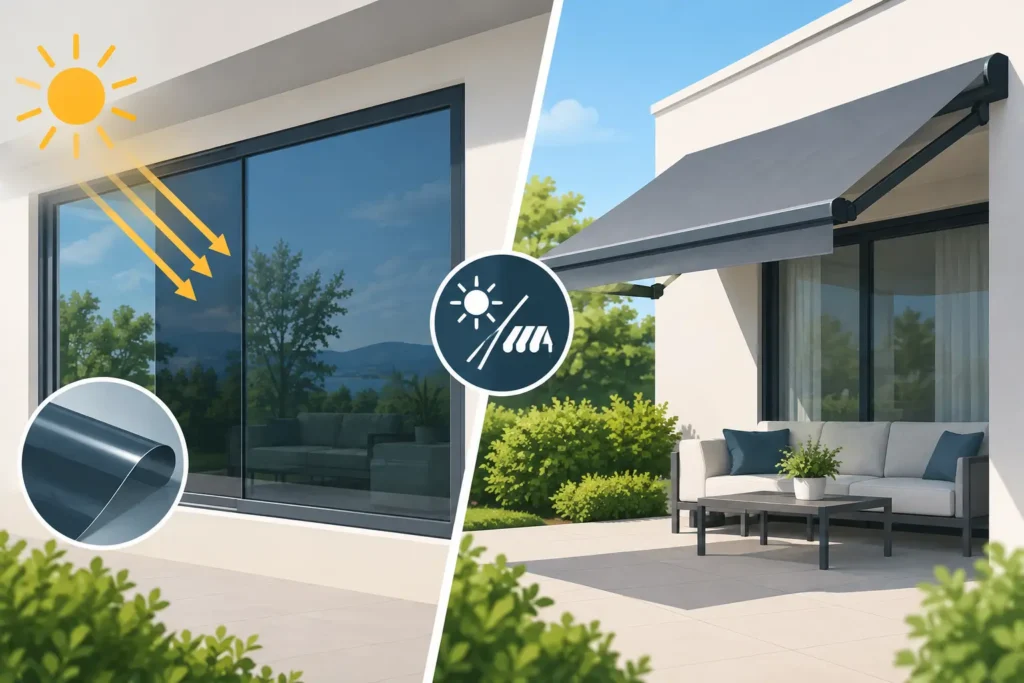
Both options can make a noticeable difference in Sydney properties. Awnings shade glass from the outside, while solar window film works directly on the glass to reduce heat, glare, and UV exposure. Each has clear strengths, and in some situations, using both is the most effective approach.
How Solar Window Film Works
Solar window film is a high-performance layer professionally applied to the inside surface of existing glass. Premium films are designed to reject a portion of solar heat, reduce glare, filter up to 99% of damaging UV rays, and help preserve views and natural light.
Unlike heavy curtains or blinds, film works all day without needing to be opened, closed, raised, or lowered. It is especially useful for large fixed windows, upper-story glazing, skylights, office partitions, and areas where an exterior awning would be impractical or change the building’s appearance.
The right film can be selected for the priorities of the room. A lighter, low-reflective film may maintain a bright, open feel while cutting glare and UV exposure. A darker or more reflective option can deliver stronger privacy and heat reduction, although it will affect the amount of visible light entering the room. An experienced installer can explain these trade-offs before work begins.
Where Solar Film Delivers Strong Value
Solar film is often the practical choice when the goal is to improve comfort without altering the exterior of the property. It can be applied across broad areas of glass with a clean, understated finish that suits modern homes, heritage-conscious properties, retail spaces, and professional offices.
It is also a strong option where access is difficult. Windows above balconies, on upper floors, or behind landscaping may not be suitable for awnings, but they can still benefit from professionally installed film. Because the film remains in place year-round, it provides consistent UV protection for flooring, furniture, artwork, merchandise, and interior finishes.
For workplaces, glare control can be just as valuable as heat reduction. Employees sitting near windows often deal with reflections on monitors and uneven temperatures across the office. A carefully chosen solar film helps create a more comfortable, polished environment without closing off the view.
How Awnings Control Heat and Sunlight
Awnings work by stopping direct sunlight before it reaches the window. This external shading can be extremely effective, particularly on north- and west-facing windows that receive intense sun for long periods. By shading the glass itself, an awning can reduce the amount of heat absorbed by the window and transferred indoors.
Fixed awnings are a dependable choice for windows that receive regular direct sun and need permanent coverage. Retractable awnings offer more flexibility. They can provide shade in the hottest part of the day, then retract when you want more light, winter warmth, or an open exterior view.
Awnings can also add architectural character. On suitable homes and shopfronts, they create a defined outdoor look while helping shade windows, entrances, patios, and outdoor seating areas. For properties with usable outdoor space, this is an advantage that window film cannot provide.
The Limitations of Awnings
Awnings are not ideal for every window. Their performance depends on the sun’s angle, the projection of the awning, the window orientation, and whether nearby buildings or trees already provide shade. Low morning or late-afternoon sun can still reach beneath an awning, particularly on east- and west-facing elevations.
They also require more ongoing consideration than film. Fabric awnings can collect dirt, moisture, and leaves, while moving components need occasional attention. Strong wind can limit when retractable awnings are used, and some strata buildings, commercial leases, or local design requirements may restrict exterior alterations.
From a visual standpoint, an awning is a more noticeable addition. That may be exactly what you want for a patio or traditional facade, but it may not suit a minimalist home, a high-rise apartment, or a sleek office exterior.
Solar Film Versus Awnings: The Key Differences
The central difference is where each product manages the sun. Awnings prevent a large amount of direct sunlight from striking the glass. Solar film manages solar energy at the glass, reducing heat and glare while retaining a clean, integrated appearance.
If a window receives powerful, direct overhead sun and there is room for an exterior structure, an awning can provide outstanding shade. It is particularly effective when the aim is also to make an outdoor area more usable. If the priority is heat and glare reduction across expansive glass, preserving the exterior look, or protecting interiors without adding moving parts, solar film is often the stronger fit.
Privacy is another point of difference. Awnings offer limited daytime privacy because they primarily shade from above. Solar film can improve daytime privacy depending on the film selected, especially when exterior light is stronger than interior light. It should not be treated as a complete nighttime privacy solution, however. Once lights are on inside after dark, blinds, curtains, or another privacy treatment may still be needed.
Cost should be considered over the full life of the improvement, not only on installation day. Awnings vary widely in price based on size, fabric, frame, motorization, mounting requirements, and controls. Solar film costs vary by glass area, access, film performance, and installation complexity. Film generally involves less visible building work and fewer maintenance demands, while an awning may bring added outdoor-living benefits that justify the investment.
When Combining Film and Awnings Makes Sense
For high-exposure rooms, the answer does not always have to be one or the other. An awning can manage direct sun on the exterior, while solar film provides year-round UV filtering, glare control, and protection when sunlight arrives at lower angles or the awning is retracted.
This combination can work particularly well for large west-facing rooms, sunrooms, storefronts, and offices with substantial glazing. The awning helps reduce the peak load from direct sun, and the film improves the performance of the window across the rest of the day. The result can be a cooler, more consistent interior without making the room feel closed in.
That said, combining products is not automatically necessary. A professional assessment should look at the glass type, window direction, existing shading, room use, and desired appearance. Installing a film that is too dark or adding an oversized awning can reduce useful daylight more than expected. Quality results come from selecting the right solution, not simply adding more shading.
Choosing the Right Option for Your Property
Start by looking at when the problem occurs. If your space is hottest during late afternoon, west-facing glass is likely the main concern. If glare is the issue throughout the day, especially around computer screens or television areas, solar film may offer a more consistent improvement. If you want shade over a deck, café frontage, or outdoor sitting area as well as the window, an awning deserves serious consideration.
Also consider the role of the glass. Clear views, natural daylight, architectural appearance, and privacy all matter. A premium window film can be tailored to preserve more of these features than many people expect, but the specification matters. The best-looking result is one that improves performance while still complementing the property.
For Sydney homeowners and business owners, Prestige Tinting can assess the exposure and purpose of each window, then recommend a premium film solution designed for lasting comfort, protection, and a flawless finish. A well-chosen treatment should make the space easier to enjoy every day, not make you compromise on the light, views, or style that made the property appealing in the first place.