
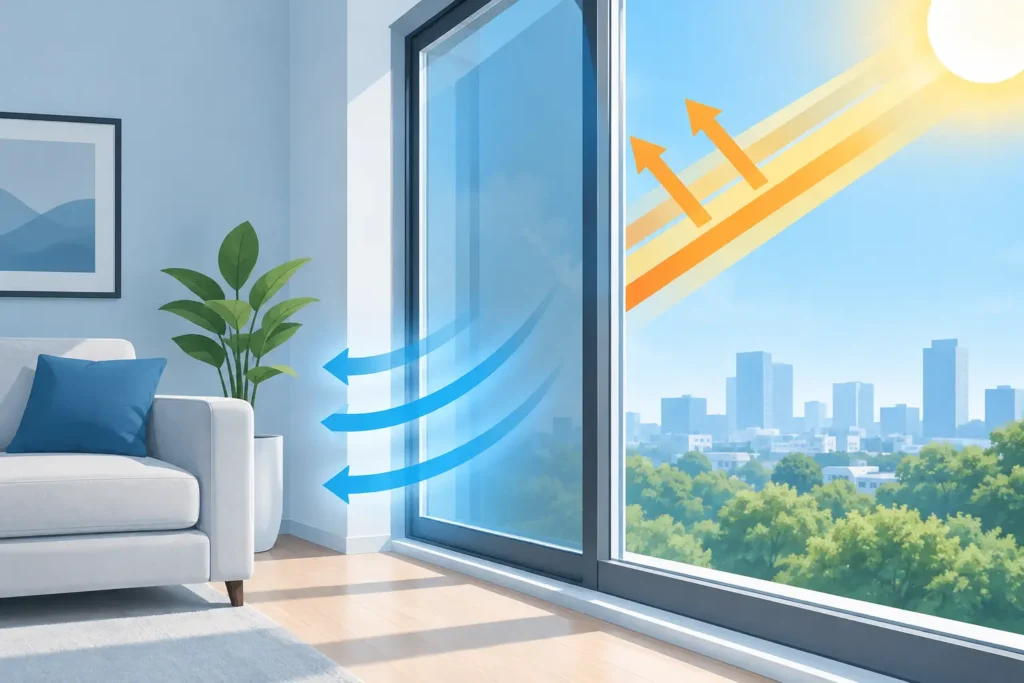
A sunny window can make a room feel inviting for an hour, then leave it hot, glary, and difficult to cool for the rest of the day. Low emissivity window film is designed to address that comfort gap by managing how heat moves through glass, while still allowing useful natural light into the space.
For homeowners and business owners, the appeal is practical: more even indoor temperatures, less strain on HVAC systems, reduced glare, and better protection for furnishings. The right film can also improve the appearance of a window without turning a bright room into a dark one. The key is choosing a product that suits the glass, the building, and the result you want.
What Is Low Emissivity Window Film?
Emissivity describes how readily a surface releases radiant heat. Standard glass has relatively high emissivity, which means it can allow heat energy to transfer through the window more easily. Low-emissivity, often called low-e, window film uses thin, advanced coatings to reduce that transfer.
In simple terms, it helps keep conditioned air where it belongs. During cooler weather, low-e film can reflect a portion of indoor heat back into the room rather than allowing it to radiate outward through the glass. In warmer conditions, certain low-e films can also help limit solar heat entering through windows.
This is not the same as a basic dark tint. A traditional tinted film may reduce visible light and some solar heat. A low-e film is engineered to manage infrared energy more selectively, often delivering better thermal performance with a lighter, more natural-looking finish.
Why Windows Create Comfort Problems
Glass is usually the weakest thermal point in an exterior wall. Even well-designed homes and offices can have rooms that feel noticeably different near large windows, sliding doors, shopfronts, or glass partitions exposed to the sun.
In summer, direct sun can quickly raise surface and room temperatures. Air conditioning then works harder to bring the space back under control. In winter, the inside pane can feel cold, and warm indoor air is drawn toward that colder surface. That can create drafts, cold spots, and uneven comfort even when the thermostat says the room is at the right temperature.
Low-e film does not turn single-pane glass into a fully insulated wall, and it cannot solve every building-performance issue. However, it can be a valuable retrofit when replacing windows is not desirable, practical, or within budget.
The Benefits of Low Emissivity Window Film
More Consistent Indoor Temperatures
The most noticeable result is often comfort rather than a number on an energy bill. Rooms with west-facing windows, large glass doors, or strong afternoon exposure can feel less harsh and easier to use throughout the day.
By reducing radiant heat transfer, low-e film helps minimize temperature swings near the glass. That is especially useful in living rooms, bedrooms, offices, meeting rooms, retail spaces, and areas where people sit close to windows.
Lower HVAC Demand
When windows allow less unwanted heat gain or heat loss, heating and cooling systems do not need to work as hard to maintain the set temperature. Actual savings depend on the climate, window size, glass type, building insulation, thermostat settings, and how the space is used.
A heavily glazed office with long sun exposure may see a different outcome than a shaded home with modest windows. Professional recommendations should focus on the specific conditions of the property rather than promising one universal savings figure.
Reduced Glare Without Losing the View
Glare can be just as disruptive as heat. It makes television screens difficult to see, creates reflections on computer monitors, and can make a workspace uncomfortable at certain times of day.
Many modern low-e films are available in light, neutral tones. They can reduce glare and manage infrared heat while preserving a clearer view and a more open feel than a heavily tinted option. This is particularly valuable where daylight and exterior views are part of the appeal of the property.
Protection for Interiors
Sunlight can gradually fade floors, rugs, artwork, furniture, window coverings, merchandise, and marine interiors. UV exposure is a major factor, but visible light and solar heat also contribute to fading and material deterioration.
Premium window films can block up to 99% of UV rays while reducing the heat and light that accelerate wear. No film can stop fading completely, but it can provide meaningful additional protection for the finishes and assets you have invested in.
Low-E Film vs. Solar Control Film
Low-e and solar control films overlap, but they are not identical. Solar control film is primarily selected to reduce solar heat, glare, and UV exposure. It is often the preferred solution for hot rooms, sun-facing office windows, vehicles, and spaces where summer comfort is the main concern.
Low-e window film has a stronger focus on year-round thermal performance. It can help retain indoor heat during cooler periods while also managing solar heat depending on the product. For properties that experience both hot sun and cooler seasonal conditions, this balance can make low-e film an appealing choice.
The best option depends on what creates the biggest problem. If a room is uncomfortably hot every afternoon, a high-performance solar control film may be the priority. If the issue is year-round temperature instability near older windows, a low-e film may offer a better fit. In some cases, a spectrally selective film provides the right middle ground: strong heat rejection with high visible light transmission.
Is Low Emissivity Window Film Right for Your Glass?
A professional assessment matters because film and glass must work together safely. The installer should identify whether the window is single-pane, double-pane, laminated, tempered, low-e coated, or part of an insulated glass unit. Glass thickness, edge condition, orientation, shading, and frame type can all affect film selection.
Some films can increase thermal stress in certain types of glass, particularly if the window already absorbs significant heat or has existing damage. An experienced installer evaluates these risks before recommending a product. This is one reason generic, off-the-shelf film is not always a wise choice for large residential windows or commercial glazing.
It is also worth checking manufacturer guidance for insulated glass units. A professionally specified film should be compatible with the window system, and the product warranty should be clear before work begins.
Where Low-E Film Delivers the Most Value
Low-e film can be effective in homes, offices, retail environments, and other glazed spaces where comfort and energy performance matter. It is particularly useful for large windows, glass doors, sunrooms, conference rooms, street-facing storefronts, and rooms with direct morning or afternoon sun.
For homeowners, it can make a favorite living area more comfortable without changing the exterior character of the home. For offices, it can help reduce glare on screens and improve comfort for employees seated near windows. For commercial spaces, it offers a polished upgrade that helps protect displays, flooring, and furnishings while maintaining a welcoming presentation.
Privacy requirements should be considered separately. Some low-e films provide a modest reflective appearance during daylight, but they are not a complete privacy solution at night when interior lights are on. If privacy is a priority, the film specification may need to combine thermal performance with a darker tint, frosting, or another decorative treatment.
Why Professional Installation Makes the Difference
High-quality film is only as good as its installation. Clean glass preparation, accurate measuring, careful edge finishing, and a controlled application process all influence clarity, durability, and appearance. A flawless finish should look intentional, not like an afterthought.
Professional installers can also explain the practical trade-offs before the work starts. A lighter film preserves more daylight. A darker or more reflective film may reject more glare and heat, but it can change the look of the glass and reduce visibility. The right recommendation should reflect how you use the room, not simply which film has the highest performance figure on paper.
After installation, some moisture haze or small water pockets can be visible while the film cures. This is normal and generally clears as the adhesive settles. Curing time varies with weather, glass type, and film selection, so following the installer’s care advice helps protect the finish.
If your windows are making a room harder to cool, too bright to work in, or uncomfortable when temperatures drop, the answer may be more targeted than replacing the entire window. A professional film consultation can identify where heat is moving, what the glass can safely support, and which premium solution will make the space feel better every day.