
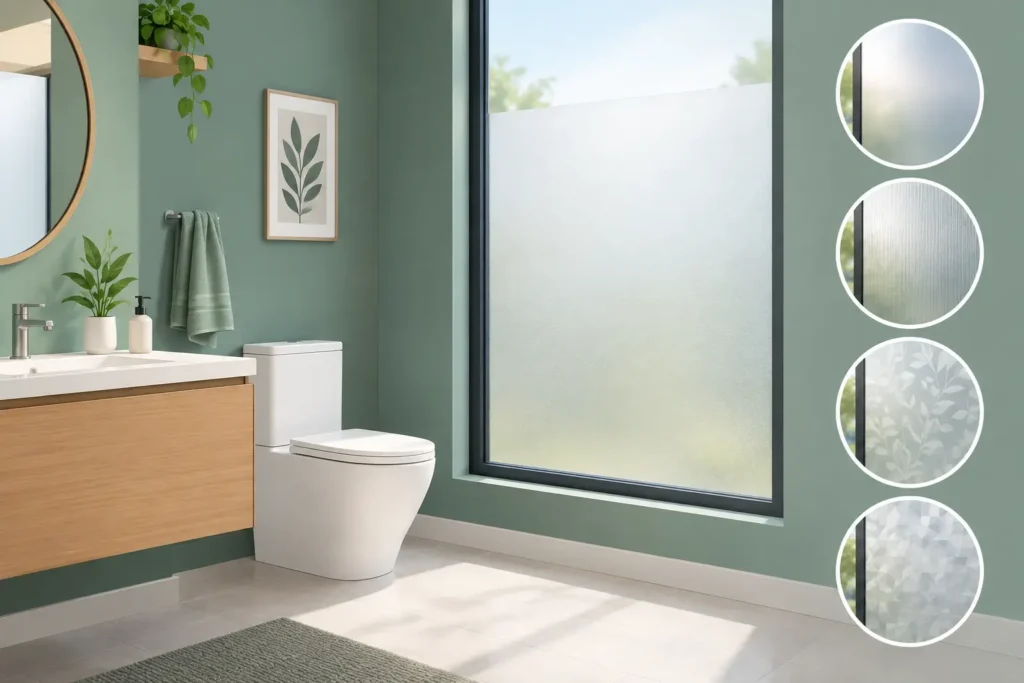
A bathroom window should bring in daylight without putting your privacy on display. That sounds simple, but the best films for bathroom privacy need to do more than obscure a view. They must suit the window’s position, preserve the amount of natural light you want, handle a humid environment, and look right with the rest of your home.
For many homeowners, window film is a practical alternative to blinds or curtains. It gives the glass a clean, finished appearance, requires very little maintenance, and can provide privacy at all hours without making a small bathroom feel enclosed. The right choice depends on whether your priority is complete obscurity, a softer decorative finish, daytime screening, or a combination of privacy and protection.
What the Best Films for Bathroom Privacy Need to Deliver
Bathroom privacy is different from privacy in a living room or street-facing office. You may need coverage from nearby homes, an upper-level window, a walkway, or a neighboring property only a few feet away. In these spaces, a film that works only during daylight is often not enough.
A quality bathroom film should provide dependable obscurity from both sides while still allowing useful natural light through. It should also adhere cleanly to the glass and resist peeling or edge lifting when exposed to normal bathroom moisture. Professional-grade materials and careful installation matter here. A film that looks smooth on day one but develops bubbles or lifting edges later is not a premium result.
Appearance matters as well. Bright white frosted finishes suit many contemporary bathrooms, while subtle patterns, gradients, or reeded-glass effects can add character without compromising comfort. The objective is not simply to cover the window. It is to make the glass look like it was always designed to be part of the room.
Frosted Film: The Reliable All-Hours Choice
Frosted window film is usually the strongest all-round option for bathroom privacy. It diffuses the view through the glass in both daylight and darkness, so it does not rely on exterior light being brighter than interior light. You can leave the bathroom light on at night and retain the same level of screening.
This film is available in different levels of opacity. A lightly frosted finish softens shapes and views while keeping the room bright. A denser, more opaque frost provides stronger screening for ground-floor bathrooms, shower windows, and properties with close neighboring windows. The right opacity comes down to distance and sightlines. A window facing a distant garden may need only a subtle finish, while a window beside a shared driveway may call for much more coverage.
Frosted film also works well on sections of glass rather than the entire pane. For example, a lower band can cover the line of sight from outside while the upper part of the window remains clearer for maximum daylight. This approach can be especially effective in bathrooms with tall or narrow windows.
Decorative Privacy Film for a More Designed Finish
Decorative film offers privacy with more visual personality. Rather than a plain frosted surface, it can create the appearance of etched glass, reeded glass, subtle geometric patterns, or softly textured finishes. It is a good fit for homeowners who want the bathroom to feel considered and cohesive, particularly in renovated homes where finishes have been selected carefully.
The trade-off is that not every pattern offers equal privacy. Open or widely spaced designs can leave too much visibility for a shower or toilet window, especially at close range. A denser pattern or a design with a frosted backing is a safer choice where full screening is needed.
Decorative film can also be used to repeat a design detail already found elsewhere in the home. A fine linear finish may complement modern tapware and tile layouts, while a softer texture can suit a more traditional bathroom. The key is choosing a style that does not date quickly or compete with the rest of the space.
Gradient Film for Targeted Coverage
Gradient film transitions from denser opacity to clearer glass. It is useful when privacy is required at eye level but the upper portion of the window can remain open for daylight and an outdoor view. In a bathroom, this can create a lighter result than full frosting while still screening the areas that matter most.
It does require precise planning. The gradient needs to begin and end at the correct height for the window and the likely viewing angles outside. A professional measure and recommendation help avoid a finish that looks attractive but leaves an unexpected sightline exposed.
Why One-Way Mirror Film Is Rarely Right for Bathrooms
One-way mirror or reflective film is often marketed as a privacy solution, but it is not usually the best choice for a bathroom. Its privacy effect depends on the light conditions. During the day, when it is brighter outside than inside, a reflective film can reduce visibility into the room. At night, once the bathroom light is on and it is darker outdoors, the effect reverses. People outside may be able to see in.
That limitation makes one-way film unsuitable as the only privacy treatment for most bathrooms. It can have a place on certain high windows where glare and daytime heat are also concerns, but it should be paired with another solution if privacy after dark is essential.
For a bathroom window that needs consistent coverage, frosted or decorative opaque film is the more dependable choice. It delivers privacy without requiring blinds to be closed every evening.
Consider Solar and Safety Benefits Where They Add Value
Privacy does not have to be the only outcome of a window-film upgrade. Some bathrooms receive harsh afternoon sun, creating glare, fading finishes, and uncomfortable heat. In these cases, a privacy film can be selected alongside solar-control performance, depending on the glass type and desired finish.
For windows in vulnerable positions, safety film may also be worth discussing. It is designed to help hold broken glass together after impact, offering an added level of protection. Safety film is not automatically a privacy film, so it may need to be combined with a frosted or decorative layer to achieve the finished look you want.
These options are not necessary for every bathroom. A small, shaded ensuite may only need a simple frosted film. A large sun-facing bathroom with a low window, however, may benefit from a more tailored solution that addresses privacy, heat, and glass safety together.
Choosing the Right Opacity and Coverage
Before selecting a film, stand outside and assess the window from the locations people can realistically view it. Check neighboring windows, pathways, balconies, driveways, and any area where someone might pass. Then consider the view from inside during both the day and evening.
Full coverage is generally best for shower windows, low-level windows, and bathrooms facing close neighbors. Partial coverage is often enough for high windows, or where only the lower half of the glass is exposed to sightlines. A well-planned privacy band can retain more sky and natural light than covering the entire pane.
Remember that privacy film obscures vision but does not necessarily eliminate silhouettes. With a light frost, a person standing close to the glass may still appear as a blurred shape, particularly at night. If complete visual screening is the goal, choose a denser opacity and discuss the expected result before installation.
Professional Installation Makes the Finish Last
Bathroom windows often have tight reveals, tiled surrounds, small panes, or awkward access. These details make clean cutting and edge finishing especially important. A professionally installed film should sit neatly against the glass, with a smooth surface and no distracting bubbles, gaps, or uneven edges.
The glass must also be assessed before installation. Existing damage, old adhesive, textured glass, and some specialty glazing can affect which products are appropriate. An experienced installer can recommend a film that suits the glass and the room rather than applying a one-size-fits-all product.
After installation, care is straightforward. Allow the film time to cure as advised, then clean it with a soft cloth and a mild, non-abrasive cleaner. Avoid scraping tools and harsh chemicals that can damage the surface. Premium materials, combined with proper care, provide a long-lasting finish that continues to look sharp in a high-use room.
For homeowners who want privacy without sacrificing a bright, polished bathroom, a carefully selected frosted or decorative film is one of the most effective improvements available. Prestige Tinting can help match the level of coverage, finish, and performance to the way your bathroom is actually used, so the result feels private, practical, and purpose-built.