
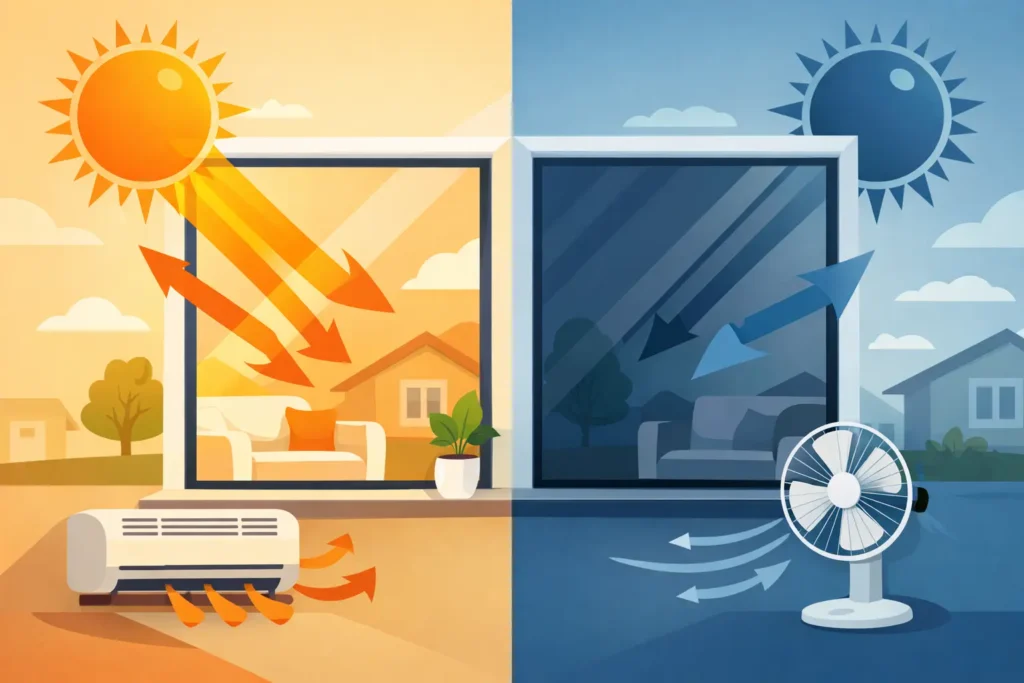
A west-facing living room can become uncomfortable long before the outdoor temperature reaches its peak. The glass may look perfectly clear, yet it allows solar energy to pour into the room, heating floors, furniture, and the air around you. So, does home window tint reduce heat? Yes. The right professionally installed solar window film can significantly reduce the amount of solar heat entering through glass, making rooms more comfortable and reducing the strain on air conditioning.
The result depends on the film selected, the type and orientation of the windows, and how much direct sun the property receives. Window tint is not a substitute for insulation, shading, or efficient HVAC equipment, but it is one of the most effective upgrades for sun-exposed glass without replacing the windows themselves.
How home window tint reduces heat
Solar window film is designed to manage the sun’s energy before it enters the room. Depending on its construction, a film can reflect, absorb, or selectively filter solar radiation. High-performance films are particularly effective at rejecting infrared heat while still allowing useful natural light through the glass.
This matters because sunlight is more than visible brightness. It also carries infrared energy, which creates heat, and ultraviolet radiation, which can fade furnishings and damage interior finishes. Once solar energy has passed through untreated glass and warmed surfaces indoors, it is harder for the cooling system to remove. A quality film helps stop a meaningful portion of that heat at the window.
The practical effect is often most noticeable in rooms with large glass doors, picture windows, skylights, or afternoon sun. A space that once felt hot and glaring can feel more balanced, allowing homeowners to use blinds less often and enjoy the view without sacrificing comfort.
What level of heat reduction can you expect?
There is no single percentage that applies to every home. Heat reduction varies by film, glazing, and installation conditions. However, premium solar-control films can reject a substantial amount of total solar energy. Darker or more reflective films may reject more heat, while spectrally selective films can provide strong solar performance with a lighter, more natural appearance.
The best measure to discuss is usually total solar energy rejected, often called TSER. It represents the portion of solar energy that does not make its way into the interior. A higher TSER generally means better heat control, although the right choice must also account for appearance, visible light, privacy, and the existing glass type.
For example, a homeowner may want maximum relief in a sun-drenched media room, where a slightly darker film is acceptable. In a bright kitchen or living area, a neutral, low-reflectivity film may be the better fit because it preserves daylight and views while still reducing heat and glare. A professional consultation makes these trade-offs clear before installation.
The window itself makes a difference
Single-pane clear glass, older double-pane windows, modern low-emissivity glass, and laminated glass all respond differently to solar film. The size of the pane, its framing, its angle, and whether it faces east or west will also affect performance.
Film should always be matched to the existing glass. Some combinations can increase thermal stress in certain windows, particularly where glass has existing damage, tight framing, or partial exterior shading. This is why premium materials and an experienced installation team matter. The goal is not simply to apply the darkest film, but to recommend a compatible solution that performs well for years.
Heat reduction is only part of the value
A cooler room is the immediate benefit most people notice, but solar window tint improves several everyday comfort issues at the same time. It can reduce harsh glare on televisions, laptops, and polished surfaces, which is especially useful in open-plan living spaces and home offices.
Quality residential film also filters the vast majority of UV radiation. UV exposure is a leading cause of fading on timber floors, upholstery, rugs, artwork, and retail displays. While no film can eliminate every cause of fading, including visible light and heat, it adds valuable protection for the finishes and belongings people have invested in.
Privacy can also be part of the solution. Certain films make it more difficult to see into a home during the day while maintaining outward views. That said, daytime privacy is not the same as nighttime privacy. When interior lights are on and it is darker outside, reflective films do not prevent people from seeing in. Homeowners who need round-the-clock privacy may be better served by frosted decorative film, window coverings, or a combined approach.
Will window tint lower cooling bills?
It can, especially in homes where direct sun drives up indoor temperatures and forces the air conditioner to work harder. By reducing solar heat gain through exposed glass, window film may help the cooling system run less frequently or recover faster during the hottest parts of the day.
Actual savings depend on the home. A well-insulated house with shaded windows will see a different result than a property with expansive west-facing glass and minimal exterior protection. Local climate, thermostat habits, electricity prices, window area, and HVAC efficiency all influence the outcome.
It is best to view window film as a targeted energy-efficiency upgrade rather than a promise of a fixed utility-bill reduction. Its strongest value often comes from combining lower cooling demand with better comfort, reduced glare, and protection for interiors. In rooms that were previously avoided on sunny afternoons, that improved usability can be just as valuable as the energy savings.
Is darker always better for heat control?
Not necessarily. Dark film reduces visible light, and many dark films do provide strong heat rejection. But a darker appearance is not the only route to solar performance. Modern ceramic and spectrally selective films can reject significant infrared heat while remaining light, neutral, and less noticeable on the glass.
This is an important consideration for homeowners who want to retain a bright interior, comply with building or strata requirements, or keep the exterior appearance of the property unchanged. It is also relevant for offices and storefronts, where natural light contributes to the feel of the space but glare and heat can make work areas uncomfortable.
The best film balances performance with the way you use the room. A bedroom may prioritize privacy and morning glare control. A waterfront living room may prioritize heat rejection while protecting a clear view. A home office may need a low-reflective finish that helps screen visibility without making the room feel dark.
Why professional installation matters
Residential window film is a precision product. A clean, durable, flawless finish depends on proper preparation, accurate cutting, and careful application around frames, seals, and large panes of glass. Professional installers also assess the glass type and recommend a film appropriate for its condition and exposure.
DIY film may appear less expensive initially, but bubbles, peeling edges, uneven coverage, and poor optical clarity can quickly undermine the result. Lower-grade products may also discolor or lose performance over time. Premium materials installed by an expert team are designed to provide consistent heat reduction, a refined appearance, and long-term value.
After installation, most films need a curing period. During that time, a slight haze or small water pockets can be normal as the mounting solution dries. The installer should explain what to expect, how to clean the glass afterward, and when the finished appearance will settle.
Choosing the right film for your home
Start with the problem you want to solve. Is the room too hot in the afternoon, difficult to work in because of glare, exposed to neighboring properties, or showing signs of fading? Then consider the direction of the glass, the size of the windows, the look you want to maintain, and whether the property has specific building requirements.
A tailored recommendation will usually compare a few suitable options instead of pushing one film for every window. At Prestige Tinting, the focus is on matching premium window film to the property, the glass, and the outcome you want, from cooler living spaces to better privacy and protected interiors.
If direct sun is making part of your home difficult to enjoy, a professional window-film assessment is a practical next step. The right solution can help you keep the light, reduce the heat, and make the room feel comfortable when it matters most.