
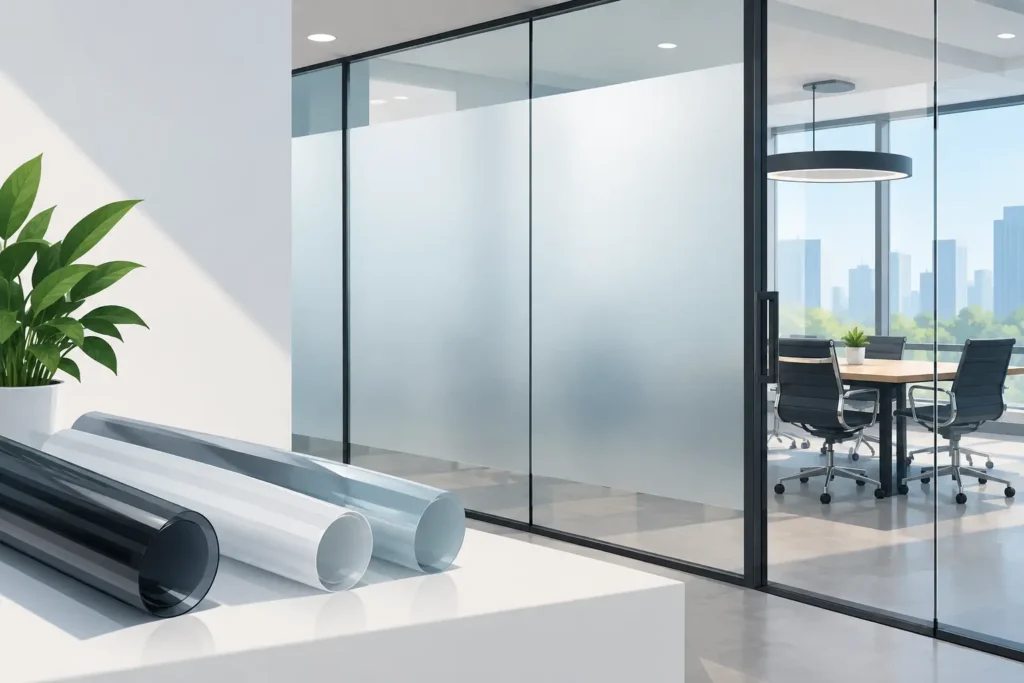
A clear glass wall can make a room feel open and polished, but it can also put every meeting, workspace, and private conversation on display. This glass partition film guide helps homeowners, office managers, and business owners choose a finish that preserves natural light while adding privacy, safety, and a more considered look.
Glass partition film is not a one-size-fits-all product. The best result depends on how the room is used, where the glass sits, how much privacy is needed, and whether the film must also address glare, heat, or safety. A professional recommendation turns those requirements into a finish that looks intentional rather than added as an afterthought.
What Glass Partition Film Can Do
Partition film is applied directly to existing internal or external glass. It can transform plain panes, office dividers, meeting-room walls, sidelights, and glass doors without the disruption and expense of replacing the glazing.
For offices, the main benefit is usually privacy. Frosted or patterned film softens the view through a meeting room while allowing daylight to travel through the space. This helps maintain the open feel of a glass-led workplace without making staff or visitors feel exposed.
In homes, partition film is often used on bathroom windows, internal glass doors, entry sidelights, or areas where neighboring properties overlook the space. It provides daytime and nighttime visual privacy where the right opacity is selected, while avoiding the enclosed feel of a solid wall or heavy blind.
Film can also support safety and presentation. Safety film helps hold broken glass together after an impact, while decorative options can introduce subtle texture, company branding, directional graphics, or a clean architectural detail. The right film should improve the way a space works as well as the way it looks.
Choosing the Right Glass Partition Film
Start with a practical question: what do you need people to see, and what do you need them not to see? From there, an experienced installer can narrow down the finish, opacity, placement, and performance level.
Frosted Film for Everyday Privacy
Frosted film is the most familiar choice for glass partitions because it offers a refined balance of light and privacy. It blurs the view on both sides of the glass, making it well suited to conference rooms, treatment rooms, bathrooms, consultation areas, and front entry panels.
A full frosted finish gives the strongest visual separation. A partial band, sometimes called a manifestation strip, can define a space and improve visibility of the glass while keeping most of the view open. This is a popular choice for offices that want privacy at seated height but still value an airy, connected layout.
Not all frosted films look the same. Some have a soft etched-glass appearance, while others are brighter, denser, or more translucent. The quality of the material matters here. Premium film delivers a more even finish and is less likely to discolor, lift at the edges, or show an uneven adhesive pattern over time.
Decorative and Patterned Film
Decorative film gives partitions more personality without committing to permanent etched glass. Options may include subtle lines, gradients, geometric patterns, reeded-glass effects, or custom-cut designs. These work particularly well in reception areas, hospitality settings, showrooms, and homes with contemporary interiors.
The key is restraint. A pattern should complement the space, not compete with the furnishings, signage, or view beyond the glass. In a professional office, a simple gradient or clean horizontal band often feels more premium than a busy design. In a home, a textured film can bring warmth and privacy to a bathroom or internal door without blocking all natural light.
Branded Partition Film
For businesses, partition film can carry a logo, brand colors, room names, or directional information. It is a practical way to make meeting rooms and reception areas feel more established, especially in shared commercial buildings where a first impression matters.
Branding should remain readable from the intended viewing distance and work with the existing architecture. A full logo across a glass wall may suit a reception zone, while smaller repeated elements or room labels can be more appropriate for internal spaces. Professional design and installation help ensure graphics sit straight, align with frames and door hardware, and retain a polished appearance.
Safety Film for Vulnerable Glass
Safety film is designed to strengthen the glass by helping retain fragments if the pane breaks. It can be a smart consideration for busy offices, schools, retail spaces, glass doors, low-level windows, and homes with active children or pets.
It is important to be clear about the goal. Safety film can improve glass retention and reduce the risk of scattered shards, but its suitability depends on the glass type, frame, installation method, and the level of protection required. If compliance or higher-risk security is a concern, the glass and film system should be assessed properly rather than selected on appearance alone.
Solar and Glare-Reducing Film
Some glass partitions sit near large exterior windows or face strong sunlight. In these locations, glare can make screens difficult to use and heat can make rooms uncomfortable. Solar control film may help reduce glare, UV exposure, and heat gain while preserving a bright interior.
However, solar film is usually more relevant to exterior glazing than internal partitions. It also changes the glass appearance, sometimes with a reflective or tinted finish. A clear conversation about the room’s orientation, daylight levels, and existing glass will determine whether solar performance is worth prioritizing.
Privacy Is Not the Same as Darkness
One of the most common concerns is that privacy film will make a room feel closed in. It does not have to. The best option depends on whether you need complete visual concealment, softened outlines, or simply a clearer boundary between spaces.
Opaque film offers the most privacy, but it removes sightlines and can noticeably change the room’s character. Frosted film lets light pass through while obscuring details. Gradient film offers privacy where people are seated or standing, then becomes clearer higher up. Patterned film can interrupt direct views without hiding everything.
Consider privacy after dark as well. When lights are on inside a room and the surrounding area is dim, silhouettes can become more visible through some translucent films. Bathrooms, consultation rooms, and street-facing spaces may need a denser film or a different window treatment to achieve the desired result at all hours.
Installation Quality Makes the Difference
Even premium film can look poor when it is installed without the right preparation and technique. Dust, misaligned cuts, trapped moisture, rough edges, and poorly positioned joins are all more noticeable on glass partitions because the surface is so visible.
Professional installation begins with assessing the glass, measuring carefully, and confirming how doors, frames, handles, and seals affect the film layout. The glass must be thoroughly cleaned before the film is applied. Once installed, the film is trimmed precisely and finished around edges and hardware for a clean, consistent result.
Some moisture or a slight hazy appearance can be visible while the film cures. This is normal and usually clears as the adhesive settles. The curing period varies with film type, temperature, and humidity, so it is best to follow the installer’s care advice before cleaning or placing pressure on the film.
At Prestige Tinting, the focus is on matching premium materials and experienced workmanship to the way each home or workplace is actually used. That tailored approach helps deliver a finish that looks right on day one and continues to perform over time.
Care and Expected Lifespan
Partition film is low maintenance. After the recommended curing period, clean it with a soft microfiber cloth and a mild, non-abrasive cleaning solution. Avoid harsh chemicals, scouring pads, razor blades, and abrasive powders, which can scratch the surface or damage the edges.
A professionally installed, high-quality film can provide years of reliable performance. Lifespan depends on exposure to sun, cleaning habits, humidity, glass condition, and the type of film selected. Internal decorative film generally faces less weather exposure than exterior solar film, but all film benefits from careful cleaning and quality installation.
If a tenant moves out, a brand changes, or a room is renovated, many decorative films can be removed and replaced. This flexibility is one of the strongest advantages over permanent etched or sandblasted glass.
Questions to Ask Before You Choose
Before selecting a film, confirm whether the goal is privacy, glare control, safety, branding, or a combination of these. Ask to see real samples against your glass, because the same film can look different depending on interior lighting, exterior light, wall colors, and the view behind it.
It is also worth asking where joins may be required on large panes, how the film will work around doors and hardware, and what cleaning method is recommended. For commercial spaces, check whether the design should include safety markings or comply with building requirements. These small decisions prevent avoidable surprises and lead to a more refined finished result.
A well-chosen glass film should feel like part of the original design, not a compromise. Whether you want a discreet bathroom solution, a more private meeting room, or a branded reception area, begin with the outcome you want people to experience when they enter the space.