
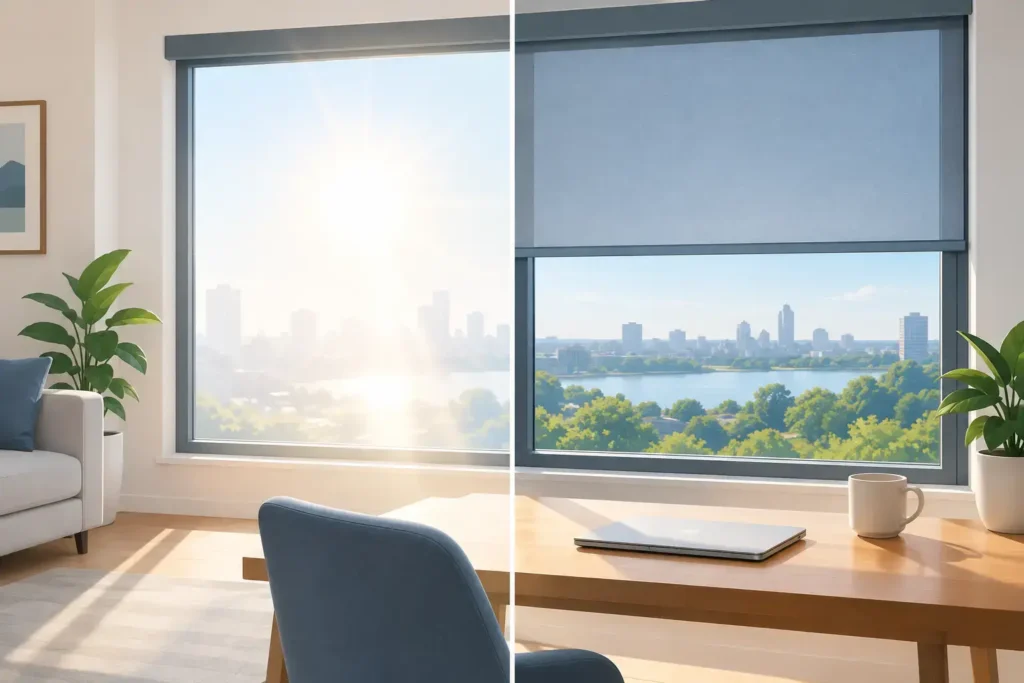
The afternoon sun can turn a beautiful room, office, or vehicle cabin into a place nobody wants to use. Screens become hard to read, polished surfaces throw harsh reflections, and people start closing blinds that block the natural light they wanted in the first place. Learning how to reduce window glare is about controlling direct light without making your space feel dark, closed in, or less inviting.
For Sydney homes, workplaces, cars, and boats, glare is often strongest on west-facing glass and large windows with wide, open exposure. The right solution depends on how the space is used, the direction of the glass, and whether heat, privacy, UV exposure, or appearance is also a concern.
Why window glare is more than a small annoyance
Glare occurs when intense sunlight hits a surface or enters your line of sight at an uncomfortable angle. It can wash out a television, make computer work tiring, create reflections on windshields, and make a room feel hotter than it should.
In a home, the effect is most noticeable in living rooms, kitchens, home offices, and media rooms. In commercial spaces, glare can affect staff comfort, reduce screen visibility, and make meeting rooms difficult to use at certain times of day. On the road or water, it can become a visibility issue that demands a more considered solution.
Sunlight also carries UV radiation and solar heat. So while curtains may reduce the brightness, they may not provide the level of heat rejection, UV protection, or clear outward views that professionally selected window film can deliver.
How to reduce window glare with window film
Solar control window film is one of the most effective ways to reduce glare while preserving daylight and views. Applied directly to the interior surface of glass, quality film filters a controlled amount of visible light before it enters the room, vehicle, or vessel.
The key is choosing the right level of visible light transmission. A darker film generally reduces more glare, but it can also change the appearance of the glass and reduce light levels in the evening. A lighter, high-performance film may maintain a bright, open feel while still cutting harsh reflections and rejecting a substantial amount of solar heat.
This is why one film does not suit every window. A sun-drenched west-facing office wall may benefit from a different film than a bedroom window, a shopfront, or a car windshield. An expert consultation considers the glass type, orientation, room use, existing window treatments, and the result you want to achieve.
Premium window films can also provide UV protection to help preserve furnishings, flooring, artwork, dashboards, and upholstery. For property owners, that added protection helps make glare control a long-term investment rather than a temporary fix.
Select film for performance, not just darkness
A common mistake is assuming the darkest film provides the best overall result. Darkness can reduce glare, but it is only one part of solar performance. Advanced films are designed to manage light, heat, and UV in different ways, including lighter options that suit homes and offices where natural light is a priority.
Reflective films can be highly effective on strong sun-exposed glass, though they may create a more noticeable exterior appearance. Neutral films provide a more subtle finish, while decorative or frosted films can soften light and add privacy where clear views are not essential. The best choice balances function with the look of the property or vehicle.
Use shades and blinds as a flexible second layer
Window film manages sunlight consistently throughout the day. Blinds, shades, curtains, and shutters give you additional control when the sun sits low or when you need darkness for a presentation, movie, or sleep.
For broad glare control, roller shades and cellular shades are often a practical choice. Light-filtering fabrics soften direct sun while keeping the room brighter than traditional blackout coverings. Solar shades can reduce glare and retain some outward visibility, although their performance varies with fabric openness and exterior light conditions.
If you choose blinds alone, remember that gaps between slats can still allow sharp shafts of light into the room. They also need to remain closed during peak sun, which can make a bright room feel shut off. Combining quality window film with adjustable treatments gives you reliable daytime comfort and flexibility when you need it.
Change the angle of screens and reflective surfaces
Sometimes the glare problem is less about the window itself and more about where a screen, desk, television, or glossy surface is positioned. Before investing in any treatment, look at the room during the time glare is worst.
Try placing computer monitors at a right angle to the window instead of directly facing it or sitting in front of it. Tilt screens slightly, use a matte screen protector where appropriate, and move mirrors, glass tabletops, or highly polished furniture away from direct sunlight. Small layout changes can noticeably improve comfort, especially in a home office.
This approach has limits. If an entire room receives intense afternoon sun, furniture adjustments may reduce reflections but will not address heat buildup, UV exposure, or the discomfort of direct light. That is where solar window film delivers a more complete result.
Consider exterior shading for high-exposure windows
Awnings, pergolas, exterior shutters, trees, and architectural overhangs can stop some sunlight before it reaches the glass. Exterior shading can be particularly useful for patios, large sliding doors, and windows that receive strong summer sun.
However, these options require enough exterior space, suitable building conditions, and ongoing maintenance. They can also affect the appearance of the property or restrict daylight during cooler months. Window film is often the more discreet option when you want glare reduction without changing the building facade.
For the strongest results, exterior shade and solar film can work together. The shade limits direct sun exposure, while the film manages the light and heat that still reaches the window.
Choose the right solution for each setting
The best way to reduce glare changes depending on where the glass is located. In homes, comfort, UV protection, privacy, and preserving views are usually the priorities. A living room might need a neutral solar film that keeps the space bright, while a bedroom may benefit from a more private or darker option.
In offices, glare control should support productivity. Employees need clear screens and comfortable workstations, but businesses also want a professional appearance and welcoming natural light. A tailored commercial film can reduce hot spots and distracting reflections across a large glazed area without making the workplace feel dim.
For vehicles, glare reduction needs to work alongside legal tint requirements and safe visibility. High-quality automotive tint can make driving more comfortable, protect interiors, and improve the look of the vehicle, but the selected film must be suitable for each window location.
Boats face another challenge: sunlight reflects off both glass and water. Marine window tinting can help improve visibility, reduce cabin heat, and protect interior finishes while standing up to demanding conditions.
Avoid quick fixes that create new problems
Temporary adhesive films, foil, heavily tinted DIY products, and poorly fitted coverings may appear inexpensive, but they can bubble, peel, discolor, or leave residue on glass. They may also provide uneven results and can be unsuitable for certain types of glazing.
Some modern windows use specialized or insulated glass units that need careful film selection. Applying the wrong product can increase thermal stress or affect manufacturer warranties. Professional installers assess the glass and recommend compatible premium materials so the finish performs as expected and looks clean from every angle.
It is also worth avoiding the habit of permanently closing curtains to solve glare. You may reduce the brightness, but you also lose views and depend more on artificial lighting. A better result is one that lets you enjoy daylight on your terms.
Get a tailored glare-control result
Effective glare reduction starts with observing when and where the problem occurs. Notice whether the issue is direct sun, screen reflection, heat, fading furnishings, or a lack of privacy. Those details make it much easier to choose a treatment that delivers a lasting improvement.
At Prestige Tinting, our expert team helps property owners, drivers, businesses, and boat owners select premium window film for their specific glass, exposure, and goals. Professional installation provides a flawless finish and consistent performance, helping you keep the light you enjoy while removing the harsh glare that gets in the way.
A well-chosen film should not make your space feel hidden from the day. It should let the room, office, vehicle, or cabin work better when the sun is at its strongest.