
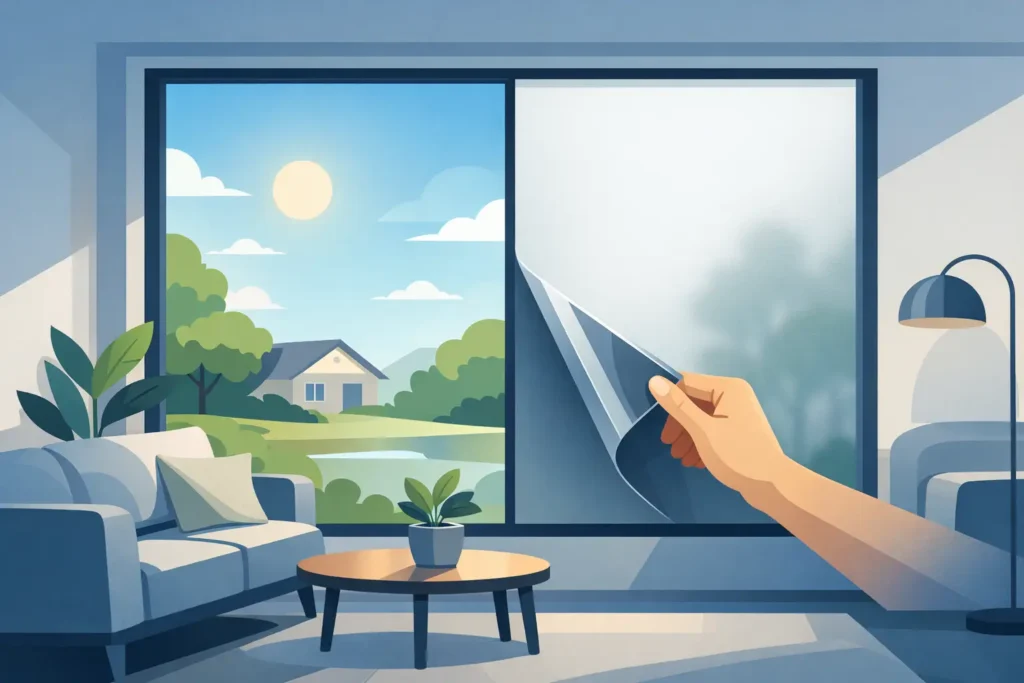
A street-facing living room should feel like part of your home, not a display window. The same applies to a glass-walled meeting room where conversations, screens, and everyday work are visible from the hallway. Privacy window film changes how glass performs without forcing you to block valuable natural light with heavy blinds or curtains.
For Sydney homes, offices, storefronts, and boats, the right film can create a more comfortable, private, and polished space while helping manage glare and UV exposure. The key is choosing a film that suits the glass, the view, the lighting, and the level of privacy you actually need.
What Privacy Window Film Can Do
Privacy film is applied directly to existing glass, creating a visual barrier without the cost, disruption, or permanent look of replacing a window. Some films frost the glass for an even, soft finish. Others use patterns, gradients, or reflective surfaces to limit views from one side.
The best result is not always the darkest or most opaque option. A bathroom may need complete privacy around the clock, while a home office might only need a subtle frosted band across the lower half of the window. In a commercial setting, a decorative film can separate meeting areas and add a refined finish while still allowing light to move through the space.
Many premium privacy films also provide practical solar-control benefits. Depending on the product selected, they can help reduce glare, filter UV rays, and lessen the intensity of sunlight entering the room. That means your glass can work harder for comfort as well as appearance.
Choosing the Right Privacy Window Film
There is no single privacy window film that suits every room or property. The right choice depends on where the glass is located, what is visible through it, and how the room is used throughout the day.
Frosted film for dependable day-and-night privacy
Frosted window film is a popular choice for bathrooms, entry sidelights, internal office partitions, medical rooms, and glass doors. It obscures the view from both sides while allowing natural light to pass through, giving the space a clean and open feel.
This is often the most reliable option when privacy is non-negotiable after dark. Unlike reflective films, frosted film does not rely on differences in light levels between indoors and outdoors. It continues to provide privacy when lights are on at night.
Frosted finishes can be full coverage or tailored to the glass. A partial panel, horizontal stripe, or custom design may be enough to screen a specific sightline while preserving a clear view elsewhere.
Reflective and one-way films for daytime screening
Reflective films can make it harder for people outside to see in during daylight, especially when exterior light is brighter than interior light. They are often considered for street-facing windows, offices, and areas exposed to strong sun.
There is an important trade-off: one-way privacy is light-dependent. At night, when indoor lights are brighter than outside, the effect can reverse and people outside may be able to see in. Blinds, curtains, or another privacy solution may still be needed after sunset.
For the right application, reflective film can be a smart combination of daytime privacy, glare reduction, and a more contemporary exterior appearance. A professional assessment helps determine whether the glass location and lighting conditions will deliver the result you expect.
Decorative film for privacy with personality
Decorative window film offers more creative flexibility. It can replicate etched glass, add geometric patterns, create subtle branding, or divide a glass wall into functional zones. This makes it especially effective in offices, retail spaces, apartment entries, and homes where plain frosting may feel too basic.
For businesses, decorative film can help create privacy in meeting rooms and treatment spaces while maintaining an open workplace design. For homeowners, it can soften a direct view into a front door, ensuite, or stairwell without making the area feel enclosed.
Where Privacy Film Makes the Biggest Difference
Privacy concerns are often more specific than people first realize. It may be the view from a neighboring balcony into a bedroom, glare and visibility around a workstation, or a glass partition that leaves a meeting room feeling exposed.
In homes, privacy film is frequently used on bathroom windows, front door glass, street-level living areas, bedrooms, and internal glass doors. It is particularly useful where a homeowner wants daylight but does not want to keep window coverings closed for most of the day.
In offices, privacy film can improve the function of boardrooms, consultation rooms, clinics, and shared workspaces. Frosted or decorative panels provide discretion for staff and visitors, while still keeping the room bright and visually connected to the rest of the space. A well-chosen design also makes plain glass partitions look more intentional and premium.
Retail and hospitality spaces can use decorative film to define areas, screen back-of-house rooms, or add branded detail to glass. On boats, film can increase privacy in cabins and enclosed areas while helping reduce the harshness of sun on the water.
Privacy, Heat, and UV Protection Are Different Needs
It is easy to assume that any tinted or dark window film will solve every problem. In practice, privacy, heat reduction, glare control, and UV filtering are related but distinct goals.
A frosted film may offer excellent visual privacy but not deliver the same solar performance as a dedicated solar-control film. A clear UV-protection film can help preserve furnishings and finishes while leaving visibility almost unchanged. A darker solar film may reduce glare and heat but may not offer full privacy at night.
This is why the glass should be assessed as part of the whole room. Window direction, existing shading, interior lighting, exterior exposure, and the type of glass all influence the best recommendation. A premium film installation is not about applying the most popular product. It is about matching the right material to the result you want.
Why Professional Installation Matters
Window film is highly visible once installed. Small imperfections can stand out in direct sunlight or across a large pane of glass, particularly with frosted and decorative finishes. Clean edges, accurate alignment, and careful preparation make the difference between a polished result and a film that looks like an afterthought.
Professional installers also understand the limitations of different glass types. Certain windows may require a specific film selection to manage heat absorption and reduce the risk of thermal stress. This is especially relevant for large panes, double-pane units, older glass, and windows with significant sun exposure.
An expert team can measure each panel precisely, recommend a finish that complements the property, and install premium materials for a smooth, long-lasting appearance. At Prestige Tinting, the focus is on tailored advice and flawless finishes so the film performs as well as it looks.
Caring for Your Window Film
Once cured, quality privacy film is straightforward to maintain. Clean it with a soft cloth or sponge and a mild, ammonia-free cleaning solution. Avoid abrasive pads, harsh chemicals, and sharp tools that can scratch the surface or damage the film edges.
Freshly installed film may look slightly hazy or show small moisture pockets while it cures. This is normal and usually clears as the installation dries. Cure time varies with weather, film type, and the amount of sunlight reaching the glass, so it is best to follow the installer’s care guidance before cleaning the windows.
Privacy should not come at the expense of daylight, style, or comfort. The most effective film is the one that makes a room feel more secure and usable while still looking like it belongs there.