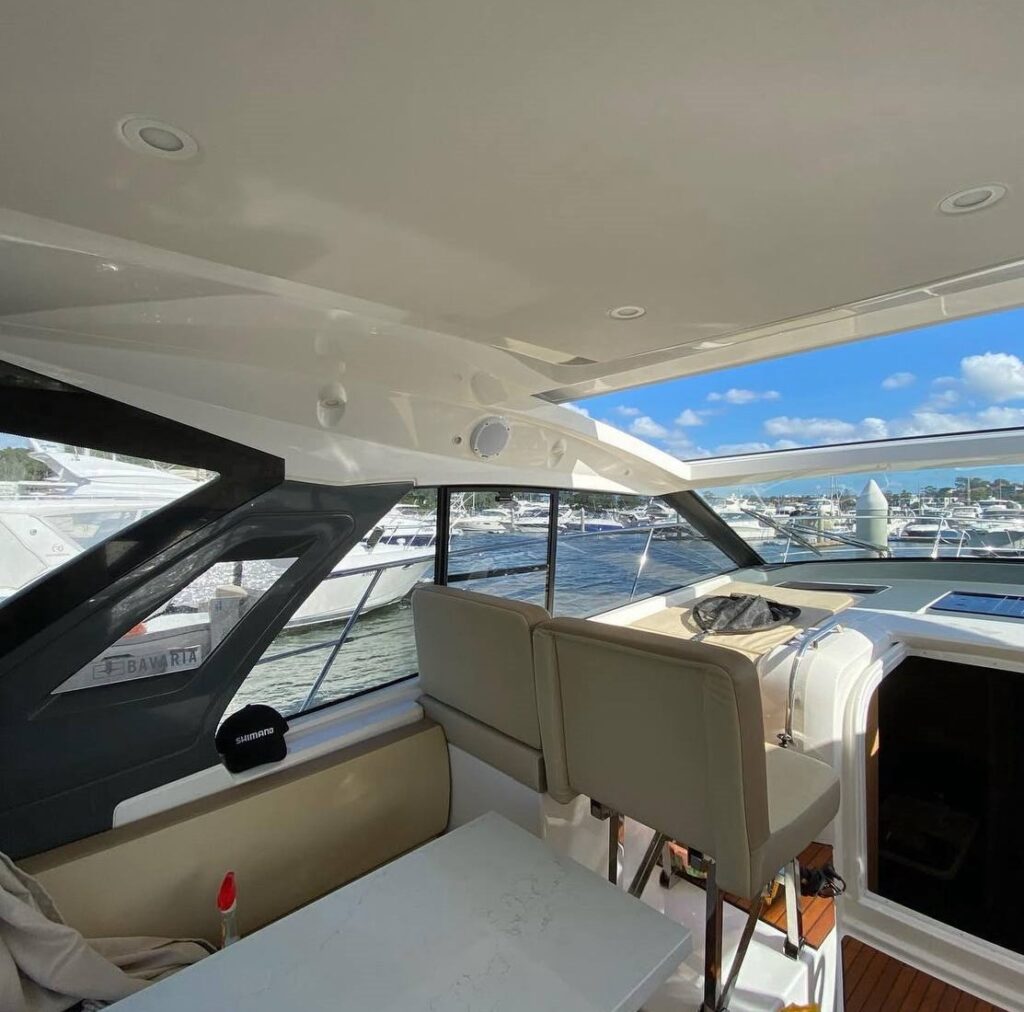
Why Boat Window Tinting Is Important Protection from Heat & Glare in Rhodes is a question every serious boat owner on Sydney Harbour should be asking. If you moor or cruise around Rhodes, you already know how punishing the summer sun can be on the water. Reflected glare off the surface makes navigation uncomfortable and even dangerous. Cabin temperatures soar. Upholstery fades. Passengers get tired faster. Boat window tinting solves all of these problems, and it does it without compromising your view or your vessel’s aesthetics.
This guide explains why boat window tinting matters for Rhodes boat owners, the types of film thatwork best in marine environments, and how Prestige Tinting delivers a professional installation that protects your investment for years. Whether you own a cruiser, a runabout, or a luxury yacht, this is the information you need before your next season on the water.
Key Takeaway: Boat window tinting in Rhodes is one of the smartest upgrades you can make for your vessel. It reduces heat, blocks UV rays, cuts glare, and protects your interior all in a single installation. Prestige Tinting has been delivering expert marine tinting across Sydney since 2015.
Why Is Boat Window Tinting Important for Rhodes Boat Owners?
Rhodes sits on the Parramatta River, where boats face strong sun exposure from multiple angles, direct overhead sun, plus intense reflection off the water. Standard boat glass offers almost no UV or heat protection. Over time, this causes serious damage: cracked dashboards, faded upholstery, overheated cabins, and fatigued passengers.
Boat window tinting addresses these issues at the source. Quality marine films from Prestige Tinting block up to 99% of harmful UV rays and reject significant solar heat, keeping your cabin cooler and your passengers more comfortable on even the hottest days. According to the Australian Radiation Protection and Nuclear Safety Agency (ARPANSA), UV radiation exposure is a serious health risk in Australia, making protective films more than just a comfort upgrade; they’re a safety measure.
The Science of Marine UV & Heat Exposure
Understanding why boats face such intense UV and heat exposure is the first step to protecting your vessel properly. The science behind it goes deeper than most boat owners realise.
The Albedo Effect: Why Water Amplifies Sun Exposure
The Albedo effect refers to the reflectivity of a surface. Open water has a relatively high albedo — meaning it reflects a substantial portion of incoming sunlight upward rather than absorbing it. For boat owners, this creates a double-exposure problem:
- Direct solar radiation coming down from above
- Reflected radiation bouncing up from the water’s surface at eye level and into cabin windows
This means that on a bright Sydney day around Rhodes, the UV radiation entering your cabin can be two to three times higher than what someone standing on land would experience. Standard marine glass does very little to filter this reflected radiation, which is why unprotected boat interiors degrade so quickly.
UV Radiation: UVA vs UVB — What Actually Damages Your Boat
Not all UV radiation behaves the same way. Two primary types affect boats:
- UVA Rays (320–400 nm): Long-wave radiation that penetrates deeply. UVA passes through standard glass easily and is the primary cause of interior fading, upholstery degradation, and dashboard cracking. It also contributes to long-term skin ageing.
- UVB Rays (280–320 nm): Shorter and more energetic. UVB causes sunburn and is largely blocked by standard glass — but not entirely, especially on older or thinner marine glass.
Quality window tinting films are engineered to block both UVA and UVB radiation, offering comprehensive protection that standard glass simply cannot provide.
How Heat Builds Inside an Untreated Boat Cabin
Solar heat gain in an enclosed glass cabin follows a straightforward process. Sunlight passes through the glass, is absorbed by interior surfaces (seats, dashboard, carpet), and re-emitted as infrared radiation. Because the glass traps this re-emitted heat, temperatures inside an untinted boat cabin can spike rapidly — often exceeding outdoor temperatures by 15–25°C within minutes on a hot Sydney day.
Solar control films address this by reflecting or absorbing incoming infrared radiation before it enters the cabin, reducing the greenhouse effect and keeping interior temperatures significantly lower.
Note: UV damage to boat interiors is cumulative and irreversible. A few seasons of unprotected sun exposure can permanently fade upholstery, crack dashboards, and warp vinyl fittings — repairs that often cost far more than a professional tinting installation.
Boat Window Tinting Common Problems Boat Owners Face
Why Is Window Tinting Important for Boats?
Many boat owners underestimate how exposed their vessel actually is. Unlike a car or a home window, boat glass faces reflected solar radiation from the water’s surface in addition to direct sunlight. This means UV exposure and heat gain can be two to three times higher than on land.
Why this happens: Standard marine glass is transparent to UV rays. Heat builds inside the cabin rapidly, and passengers have no shelter from glare or radiation.
Solution: Professional boat window tinting with UV-rejection films creates a protective barrier between the sun and your cabin interior. These films are specifically engineered for marine environments and don’t degrade with saltwater or sun exposure the way aftermarket solutions do.
Why it works: The film acts as a permanent UV filter, protecting both passengers and interiors. Prestige Tinting uses only marine-grade films tested for durability in Australian conditions.
Can Boat Window Tinting Reduce Heat Exposure on the Water?
Cabin heat is one of the most common complaints from boat owners who spend long days on the water around Rhodes. Without boat window tinting, a glass-enclosed cabin can feel like a greenhouse trapping heat and making the space unbearable within minutes of being in the sun.
Why this happens: Glass transmits solar heat directly into the cabin. The enclosed space has little airflow, causing temperatures to spike quickly.
Solution: Solar control films used in professional boat window tinting can reject a significant portion of incoming solar heat, keeping the cabin noticeably cooler without requiring more air conditioning or ventilation.
Why it works: Heat-rejecting films reduce the solar energy passing through the glass. Your cabin stays cooler, passengers are more comfortable, and fuel costs for air conditioning decrease.
Does Window Tinting Help Minimise Glare While Boating?
Glare on the water is not just uncomfortable, it’s a navigation hazard. Around Rhodes, where boat traffic is steady, and conditions change quickly, being blinded by sun reflection can be dangerous. Boat window tinting dramatically reduces this risk.
Why this happens: Water reflects sunlight at multiple angles. Without tinted windows, the brightness enters the cabin and impairs the skipper’s vision, especially in the late afternoon.
Solution: Anti-glare films reduce the intensity of incoming light without making windows too dark to see through. Vision remains clear; eye strain is reduced significantly.
Why it works: Prestige Tinting selects films that meet the visibility requirements for marine use you get glare reduction without sacrificing the clear sightlines you need for safe navigation.
Will Boat Window Tinting Protect Interiors from UV Damage?
UV damage to boat interiors is cumulative and irreversible. Upholstery fades, vinyl cracks, and dashboard materials degrade over time. Boat window tinting is the most effective way to stop this process before it becomes costly.
Why this happens: UV rays penetrate standard glass easily. Over a season or two, the damage becomes visible, and reupholstering or replacing interior fittings is expensive.
Solution: UV-blocking films installed by Prestige Tinting block up to 99% of UV radiation, effectively halting the fading and cracking process.
Why it works: The film acts as a year-round UV filter with no maintenance required after installation. This is a long-term protection investment that pays for itself in reduced repair costs.
Is Professional Boat Window Tinting a Long-Term Protection Solution?
Some boat owners attempt DIY tinting solutions that bubble, peel, or degrade quickly in the marine environment. Professional boat window tinting uses films specifically designed to withstand saltwater, humidity, and intense UV exposure.
Why this happens: Consumer-grade films are not engineered for marine conditions. They fail within months, leaving adhesive residue and poor appearance.
Solution: Prestige Tinting uses marine-grade films with proven durability, installed by technicians experienced in working with the curved and specialised glass found on boats.
Why it works: Professional installation combined with marine-specific films means the tint performs reliably for years, not months.
Boat Window Tinting Benefits at a Glance
| Benefit | Without Tinting | With Boat Window Tinting |
| UV Protection | Interior fades quickly | Blocks up to 99% UV rays |
| Heat Control | The cabin becomes unbearably hot | Cooler cabin, less fatigue |
| Glare Reduction | Eye strain, risky navigation | Clear vision of the water |
| Privacy | Full interior visibility | Discreet cabin at anchor |
| Interior Longevity | Rapid wear and fading | Long-term preservation |
Warning: Not all window films are suitable for marine use. Consumer-grade or automotive films can degrade rapidly in saltwater environments, leading to bubbling, peeling, and reduced performance. Always choose a specialist like Prestige Tinting who uses certified marine-grade films.
Understanding Film Types: Which Is Right for Your Boat?
Not all window films are created equal, and the marine environment demands a level of performance that most generic films simply cannot deliver. Here is a breakdown of the main film types available, what each one does, and which scenarios each suits best.
Ceramic Film
Ceramic films are the premium option for marine applications. They use nano-ceramic particles — not metal or dye — to block heat and UV radiation. Because they are non-metallic, ceramic films do not interfere with GPS, radio, or other onboard electronic signals. They offer the highest clarity, the best heat rejection, and the longest lifespan of any film type.
- Heat rejection: Up to 80% of solar heat
- UV blocking: Up to 99%
- No signal interference with electronic navigation equipment
- Ideal for: Luxury yachts, vessels with advanced electronics, or any boat where maximum comfort is the priority
Carbon Film
Carbon films use carbon particles to block infrared radiation and UV rays. They offer very good heat rejection without the metallic appearance of earlier film technologies. Carbon films are durable in marine environments and provide a clean, matte finish that suits most boat styles.
- Heat rejection: Up to 70%
- UV blocking: Up to 99%
- No signal interference
- Ideal for: Cruisers, runabouts, and everyday recreational boats
Metalized Film
Metalized films incorporate micro-layers of metal to reflect heat and UV radiation. They offer good performance at a mid-range price point, but the metallic construction can potentially interfere with some onboard electronics in certain configurations.
- Heat rejection: Up to 60%
- UV blocking: Up to 99%
- Slight potential for signal interference — verify with installer
- Ideal for: Boats where heat rejection is a priority and electronics compatibility has been confirmed
Dyed Film
Dyed films are the most basic option. They use a layer of dye to absorb (rather than reflect) solar energy, providing moderate glare reduction and some UV protection. In marine environments, dyed films have a shorter lifespan than ceramic or carbon films.
- Heat rejection: Up to 40%
- UV blocking: Up to 95%
- Lower upfront cost, shorter lifespan in marine conditions
- Suitable for: Short-term or budget applications where full marine durability is less critical
Film Types at a Glance
| Film Type | Heat Rejection | UV Blocking | Glare Control | Best For |
| Ceramic Film | Excellent (up to 80%) | Up to 99% | High | Luxury yachts, maximum comfort |
| Carbon Film | Very Good (up to 70%) | Up to 99% | Good | Cruisers, everyday use |
| Metalized Film | Good (up to 60%) | Up to 99% | High | Heat priority boats |
| Dyed Film | Moderate (up to 40%) | Up to 95% | Moderate | Budget-friendly, basic glare |
A note on VLT (Visible Light Transmission): VLT refers to the percentage of visible light a film allows through. A higher VLT (e.g., 70%) means a lighter tint with more light passing through; a lower VLT (e.g., 20%) means a darker tint. For marine use, a VLT of 35–70% is generally recommended to balance glare reduction with the clear sightlines required for safe navigation.
How to Maintain Your Boat Window Tinting: Care & Longevity Tips
Professional marine-grade window tinting is built to last, but proper care after installation makes a meaningful difference to how long your film performs and how good it looks over time.
Initial Curing Period: The First 30 Days
After installation, window films go through a curing process during which the adhesive fully bonds to the glass. During this period:
- Do not clean the tinted windows for at least 7–14 days after installation
- Avoid high-pressure hose water directly on tinted surfaces during the first 30 days
- Small water bubbles or a slightly hazy appearance in the first week is normal and will resolve as the film cures
- Do not attempt to press or smooth out bubbles yourself during this period
Routine Cleaning: What to Use and What to Avoid
Safe cleaning products:
- Mild, non-abrasive soap diluted in water
- pH-neutral automotive glass cleaner
- Distilled water (reduces mineral residue in marine environments)
- Soft microfibre cloths or lint-free cloths
Products to avoid:
- Ammonia-based cleaners (e.g., many household glass sprays) degrade the film adhesive over time
- Vinegar-based solutions, acidity can affect film clarity and adhesion
- Abrasive scrubbers, scouring pads, or steel wool will scratch the film surface
- High-pressure spray directly onto seals or window edges can lift film edges
Saltwater Rinse After Every Use
In saltwater environments like Sydney Harbour and Parramatta River, salt residue accumulates on all exterior surfaces. After each trip, a light rinse with fresh water over the exterior windows helps prevent salt crystal build-up, which over time can cause micro-abrasions on the film surface and accelerate wear at the edges.
Inspecting for Edge Lift and Bubbling
Periodically, ideally at the start and end of each boating season, inspect the edges of your tinted panels. Edge lift and bubbling are the two most common signs that a film has reached the end of its effective life, or that it was installed using non-marine-grade materials. Early intervention can often re-bond edges before the issue progresses.
Seasonal Storage and Cover Use
For boats stored out of the water during off-season months, using boat covers or storing in a covered marina can significantly extend the life of your window tinting. Even high-performance marine films benefit from reduced UV exposure during long periods of non-use.
Maintenance Tip: The single most damaging thing for boat window film is ammonia-based cleaning products. Check the label of every glass cleaner before use on tinted surfaces. If it contains ammonia, do not use it on your tinted windows.
Why Choose Prestige Tinting for Boat Window Tinting in Rhodes?
Prestige Tinting has been serving Sydney boat owners since 2015, founded by Arash Behzadi on a foundation of quality, precision, and genuine customer care. Our boat window tinting service is tailored specifically for the marine environment. We don’t apply the same films and techniques used for cars or homes. Every boat is different, and every installation is customised to fit your vessel’s unique windows perfectly.
Our Boat Tinting Process Step by Step
- Consultation – We assess your boat’s specific needs and recommend the right film type for your usage.
- Preparation – Windows are thoroughly cleaned and prepared for a flawless, bubble-free application.
- Film Selection – Choose from UV protection films, solar control films, privacy films, or decorative frosting.
- Installation – Our trained technicians apply the tint with precision, ensuring a perfect fit on every panel.
- Inspection & Aftercare – We review every installation and provide full aftercare instructions so your tint lasts.
Pricing Transparency
We believe in honest pricing with no hidden fees. Every quote is provided upfront following consultation. Pricing reflects the size and complexity of your vessel’s windows, the film type selected, and the number of panels.
Book your boat window tinting service before summer to avoid the peak season rush. UV and heat damage accumulate quickly once the warm weather arrives, so early installation means your boat is protected from the first hot day of the season.
Why Prestige Tinting Stands Apart
Prestige Tinting isn’t new to the marine tinting space. Since 2015, we’ve completed thousands of installations across cars, homes, offices, and boats throughout Sydney. Our expertise in boat window tinting stems from real hands-on experience with the unique challenges of marine glass, including curved panels, specialized framing, and the need for films that perform in harsh saltwater environments.
Our founder, Arash Behzadi, built this business on hard work, quality materials, and a commitment to results that last. Every technician we employ shares that standard. Customers from North Shore to Parramatta River return to us season after season, not because they have to, but because the results speak for themselves.
We use only premium marine-grade films and follow a structured process from consultation to final inspection. Transparent pricing, clear communication, and reliable service are at the core of everything we do.
Frequently Asked Questions (FAQ) – Boat Window Tinting
Q1: What is boat window tinting?
Boat window tinting is a protective film applied to boat glass to block UV rays, reduce heat, and minimise glare while maintaining clear visibility.
Q2: Is boat window tinting legal in NSW?
Yes, boat window tinting is legal in New South Wales as long as it does not reduce safe visibility for navigation.
Q3: How long does boat window tinting last?
With professional marine-grade film, boat window tinting usually lasts 5–10 years or longer.
Q4: Will tinting affect visibility while driving the boat?
No. Quality films reduce glare and UV without blocking the skipper’s forward visibility.
Q5: How much does boat window tinting cost in Rhodes?
The price depends on the boat size, number of windows, and film type. Quotes are usually provided after inspection.
Q6: Can tinting protect the boat interior?
Yes. UV-blocking film can block up to 99% of UV rays, helping prevent fading and damage to upholstery and dashboards.
Q7: How long does installation take?
Most boat window tinting jobs are completed within half a day to one day, depending on the vessel.
Q8: Do you provide services in Rhodes?
Yes. Mobile services are available across Rhodes and nearby Sydney suburbs.
Your Boat Deserves Better Than Another Harsh Sydney Summer
Rhodes boat owners who’ve made the switch to professional window tinting often say the same thing — “I wish I’d done it sooner.”
Cooler cabins. Less eye strain. Interiors that still look new after years on the water. It’s not magic — it’s just the right film, installed properly, by people who know marine glass.
At Prestige Tinting, we don’t rush consultations or push unnecessary upgrades. We look at your vessel, understand how you use it, and recommend only what genuinely makes sense for your situation. Sometimes that’s a full ceramic film installation. Sometimes it’s something simpler. Either way, you’ll know exactly what you’re getting and why — before any work begins.
If you’re curious about what boat window tinting could do for your vessel, a quick conversation with our team is a good place to start. No pressure, no obligation — just honest advice from people who’ve been doing this since 2015.
Contact Us Today
Call us on 0478 697 067 or 1300 618 541
Email: [email protected]
Visit: 1 Chester Road, Turramurra, NSW, 2074
Follow Us on Social Media: