
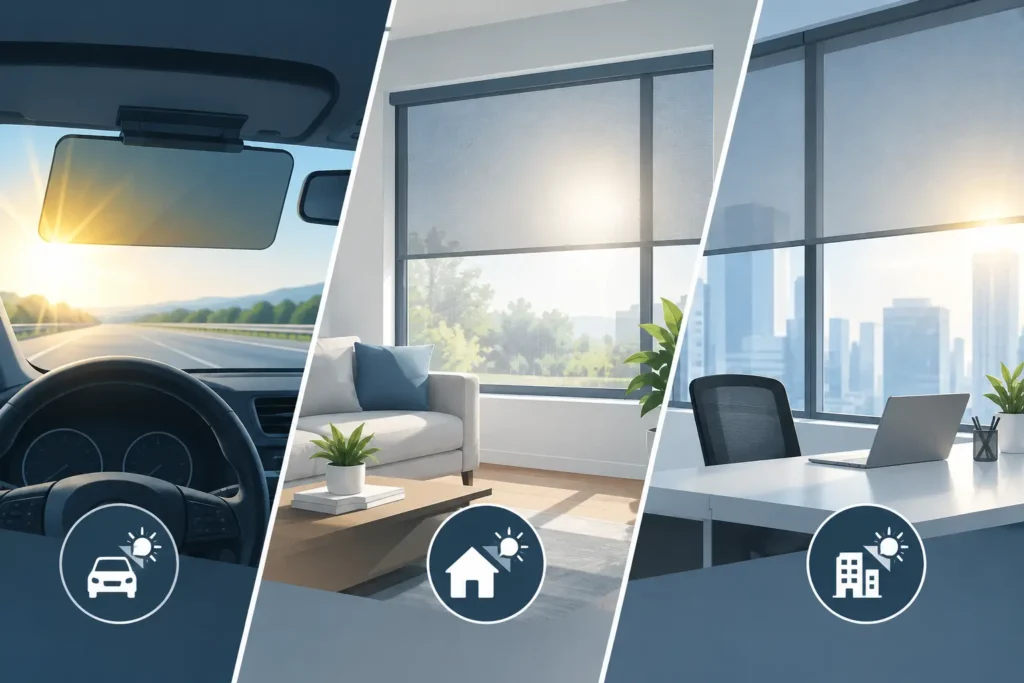
A low afternoon sun can turn a comfortable drive into a squinting contest. In a home, it can wash out the television, heat up a favorite room, and fade timber floors or furnishings. In an office, it can make screens difficult to read just when staff need to focus. The best glare solutions do more than darken glass. They control harsh light while preserving the view, comfort, appearance, and practical use of the space.
For cars, homes, workplaces, and boats, professional window film is often the most balanced answer. The right film reduces uncomfortable glare without closing off the world outside, and premium materials can also reject heat, block UV exposure, and improve privacy.
Best Glare Solutions: Start With the Source
Glare is not simply brightness. It is the contrast between a very bright surface and the area around it. Sun reflecting from water, glass buildings, pale pavement, dashboards, computer screens, and polished floors can all create visual discomfort. The solution depends on where the light enters, when it is strongest, and how the room or vehicle is used.
A west-facing living room may need strong afternoon glare control but should still feel open during the morning. A driver may need a film that cuts road glare and heat without compromising safe visibility at night. An office with large windows may need to protect monitors while maintaining a polished exterior for customers.
This is why a one-size-fits-all dark tint is rarely the best choice. A professional assessment considers glass orientation, existing shading, interior finishes, privacy needs, and local tint requirements. The goal is top-quality results that improve daily comfort rather than create a new problem with overly dark glass or excessive reflection.
Professional Window Film: The Most Versatile Option
Solar control window film is one of the best glare solutions because it works directly on the glass without blocking the window entirely. It filters portions of visible light and solar energy before they enter the vehicle, room, or workspace. Unlike curtains and blinds, it provides daytime glare control while keeping views available.
Film is available in several finishes and performance levels. A lightly tinted, spectrally selective film can reduce glare and heat while retaining a bright, natural appearance. This is often an excellent fit for homes with water, city, or garden views. A darker film can provide stronger glare control and privacy, making it popular for vehicles, media rooms, offices, and street-facing areas. Reflective films can be highly effective in harsh sun, but their exterior appearance and nighttime privacy limitations should be considered carefully.
The most suitable film is not always the darkest one. Visible light transmission, heat rejection, UV protection, interior reflectivity, and exterior appearance all matter. Premium films give property owners and drivers more options to balance these factors without sacrificing a clean, flawless finish.
For Cars: Clearer Driving and a Cooler Cabin
Sun glare is a safety issue behind the wheel. It can make traffic lights, lane markings, cyclists, and brake lights harder to see, particularly during early morning and late afternoon travel. Quality automotive tint reduces the intensity of side-window glare and helps keep the cabin cooler, which is especially valuable when a vehicle sits in direct sun.
The windshield is different. Automotive tint laws and safe driving visibility must always guide the choice of film. A professional installer can recommend compliant options for the side and rear windows and explain whether a clear UV-protective windshield film is appropriate. The right installation should look factory-finished, with clean edges and no bubbling, lifting, or patchy color.
Car window tinting also helps protect leather, dashboards, and interior trim from UV-related fading. For drivers who spend long hours on Sydney roads, that combination of comfort, protection, and style makes quality film a practical long-term upgrade.
For Homes: Light You Can Live With
Blinds and curtains have their place, especially in bedrooms or rooms requiring complete darkness. Their drawback is simple: closing them often means losing the view and much of the daylight. Residential window film lets homeowners reduce the sharpness of direct sun while keeping the room connected to the outdoors.
It is particularly effective on large picture windows, sliding doors, kitchen windows, home offices, and living areas facing north or west. By reducing glare on televisions, laptops, and glossy benchtops, film makes rooms easier to use throughout the day. It can also help reduce solar heat gain, easing the load on air conditioning during hot weather.
Fading is another consideration. UV exposure, visible light, and heat all contribute to the deterioration of floors, artwork, fabrics, and furniture. Window film does not eliminate fading entirely, but it can provide meaningful protection for the finishes and belongings that make a home feel complete.
For Offices and Commercial Spaces: Better Screen Comfort
A bright office may look impressive, but glare on screens can quickly affect comfort and productivity. Employees may tilt monitors, close blinds, move desks, or avoid parts of the office entirely when direct sun hits. Those temporary fixes can make a workplace feel uneven and less professional.
Commercial window film provides a more consistent solution. It can reduce glare across expansive glazing while preserving a light-filled workplace and a smart exterior appearance. Depending on the film selected, businesses can also benefit from lower heat buildup, increased daytime privacy, and protection for furnishings, displays, and merchandise.
For meeting rooms, storefronts, and glass partitions, decorative frosting can complement solar film. Frosted film does not provide the same solar control, but it can diffuse views, create privacy, and add a refined visual element. In some spaces, combining the two is the most effective approach.
When Shades, Blinds, and Exterior Options Make Sense
Window film is not the only answer. The best result sometimes combines film with physical shading. Roller shades are useful where occupants need adjustable light levels, such as presentation rooms and bedrooms. Exterior awnings, pergolas, shutters, and landscaping can stop direct sun before it reaches the glass, making them highly effective for exposed facades.
The trade-off is maintenance, cost, and appearance. External systems may require more space, planning, and upkeep. Interior blinds collect dust and can be left closed for most of the day, reducing daylight and views. Film is a discreet, low-maintenance foundation that works continuously, while shades and exterior structures add targeted control when needed.
For boats, this same principle applies. Marine-grade tint can reduce glare bouncing off the water and help maintain a more comfortable cabin, while removable shades may be useful for periods at berth. Materials and installation methods should be chosen for the marine environment, where salt, moisture, and intense sun place extra demands on every finish.
Avoid These Common Glare-Control Mistakes
Choosing a film only by its darkness is the most common mistake. A dark film may look appealing, yet it can make a room feel closed in or reduce nighttime visibility in a vehicle. The better question is how much glare, heat, UV exposure, and privacy control the glass needs in its real setting.
DIY film is another risk. Even a good product can perform poorly when it is cut incorrectly, contaminated during installation, or applied with trapped moisture and air. Peeling edges, visible bubbles, distorted views, and uneven coverage undermine both appearance and performance. Professional installation delivers the clean finish and reliable adhesion expected from a premium upgrade.
Finally, do not overlook glass compatibility. Some insulated, laminated, coated, or specialty glazing may require a specific film type. An experienced installer will identify the glass and recommend a suitable solution rather than applying a product that could affect thermal stress or manufacturer coverage.
Choosing a Solution That Looks as Good as It Performs
The right glare-control solution should feel almost invisible in everyday use. You should notice that the room stays more comfortable, the screen is easier to see, the drive feels less tiring, or the cabin is more pleasant – not that the glass has become a compromise.
Prestige Tinting helps clients match premium window film to the way they use their cars, homes, offices, and boats. With tailored recommendations, quality materials, and expert installation, glare reduction becomes a lasting improvement in comfort, protection, privacy, and style.
If bright sun is limiting how you enjoy a space, start by looking at the glass that receives it. A professionally selected film can make that same view calmer, cooler, and far more comfortable every day.