A meeting room that turns into a greenhouse by midmorning, computer screens washed out by afternoon sun, and exposed glass that leaves staff feeling on display are not minor workplace irritations. They affect comfort, concentration, and how clients experience your business. The best office films address those problems at the glass, improving the space without the cost and disruption of replacing windows.
For offices with large glass facades, street-facing windows, or internal glass partitions, window film is one of the most practical upgrades available. The right solution can reduce solar heat, filter damaging UV rays, cut glare, strengthen privacy, and give the workplace a more considered finish. Choosing well matters because no single film is right for every room or every type of glass.
What Makes the Best Office Films Different?
Office window film should solve a defined problem while preserving the qualities you value in your glazing, such as daylight, views, or an open-plan feel. A premium film is not simply a darker layer on glass. It is a professionally selected and installed product designed to manage light, heat, safety, or privacy in a predictable way.
The best results start with a site-specific assessment. A west-facing boardroom in direct sun needs a different film from an internal meeting room that requires confidential conversations. Likewise, a contemporary office with clear glass may need a subtle, near-invisible solar film, while a medical practice or professional services firm may benefit from decorative frosting that defines private areas.
Professional installation is equally important. Quality materials and an expert team help ensure clean edges, smooth application, and a finish that looks like part of the original fit-out rather than an afterthought. This is particularly valuable on large panes, high windows, and detailed glass partitions where imperfections are easy to notice.
The Best Office Films for Heat and Glare
Solar control film is often the first choice for offices dealing with strong sunlight. It can reject a significant portion of solar heat before it enters the room, helping spaces feel cooler and reducing reliance on air conditioning. In busy commercial settings, that can support more consistent comfort across desks, reception areas, and meeting rooms.
Glare reduction is just as valuable. Natural light is an asset until it creates reflections on monitors, makes presentations difficult to see, or forces employees to close blinds during the brightest part of the day. Solar window films soften harsh light while allowing usable daylight to remain. The result is a clearer view of screens and a more comfortable working environment without making the office feel shut in.
There is a trade-off to consider. Darker or more reflective films typically provide stronger heat and glare control, but they can change the appearance of the building and reduce visible light. Lighter, spectrally selective films are often a better fit when maintaining a bright interior and an unobstructed outward view is the priority. A professional recommendation should balance performance with the look you want to achieve.
UV Protection for Interiors That Matter
Sunlight can fade flooring, timber finishes, artwork, upholstery, retail displays, and office furniture over time. UV-filtering window film helps protect these investments by reducing the UV exposure that reaches interior surfaces.
It will not stop all fading, since heat and visible light also play a role, but it provides an important layer of protection. For offices with premium furnishings, display areas, or valuable finishes near windows, this benefit can be as important as temperature control.
Privacy Films for Glass-Walled Workplaces
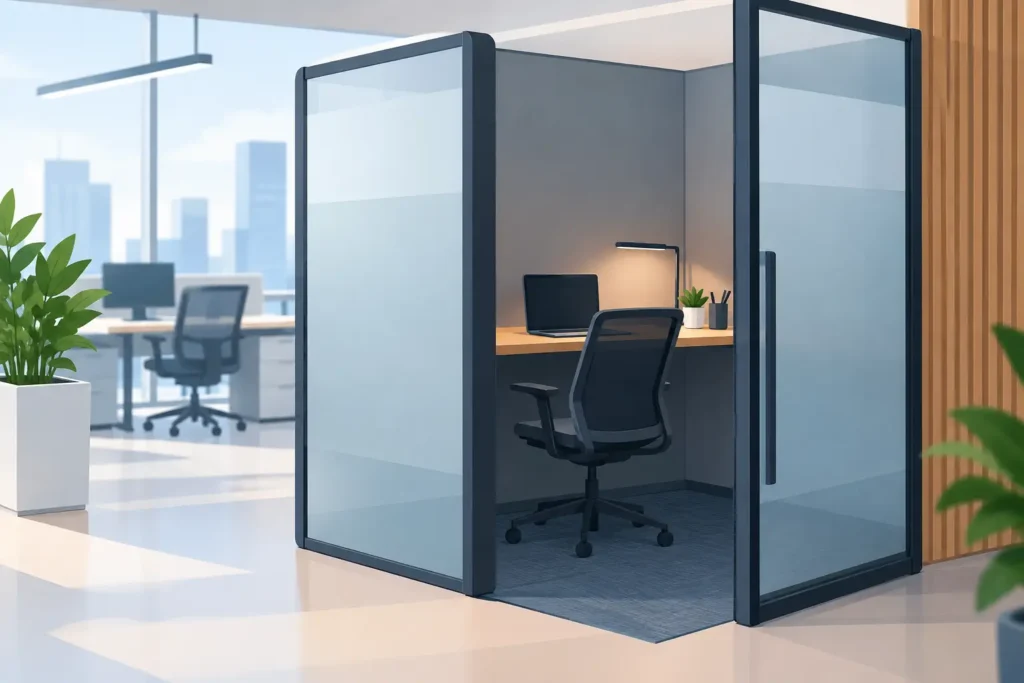
Glass partitions make an office feel open and modern, but total transparency is not always practical. HR meetings, interviews, financial discussions, clinical consultations, and executive calls need an appropriate level of privacy. Decorative frosting is a polished way to create it without losing the light-sharing benefits of glass.
Frosted window film can cover an entire panel or be applied in bands, gradients, patterns, and custom layouts. A horizontal frosted band is a common option for meeting rooms because it provides privacy at seated eye level while retaining openness above and below. For reception areas, branded or decorative designs can reinforce a professional appearance and help visitors find their way through the space.
The key is to match the privacy level to the room’s purpose. Fully frosted glass suits spaces that need visual separation, while partial frosting works well where privacy and visual connection need to coexist. Unlike curtains or blinds, decorative film is fixed in place, easy to maintain, and does not collect dust or interrupt clean architectural lines.
Safety and Security Window Film for Added Confidence
Safety window film is designed to hold shattered glass together if a pane breaks. This can reduce the spread of fragments caused by accidental impact, severe weather, or attempted forced entry. It is a sensible consideration for street-level offices, schools, storefronts, and buildings with areas of vulnerable glazing.
It is important to be precise about what safety film can do. It can improve glass retention and make breakage more difficult, but it does not turn ordinary glass into an impenetrable barrier. The correct product, glass type, anchoring approach, and installation method all affect performance. Businesses with specific compliance, security, or risk-management requirements should seek tailored advice rather than relying on a generic film description.
For many offices, safety film is most effective as part of a broader property protection plan that may include alarms, access control, quality locks, and well-designed lighting. Its value is in adding another practical layer of protection while maintaining the existing appearance of the glass.
How to Choose the Right Film for Your Office
Before selecting a product, consider what is happening in each part of the workplace. The best office films are often a combination of solutions rather than one film installed everywhere. A reception window may need heat reduction and a refined exterior appearance, a boardroom may need privacy, and a sun-exposed open-plan zone may need maximum glare control.
Start by looking at the direction each window faces and when discomfort occurs. East- and west-facing glazing can create intense low-angle sunlight, while north-facing windows may receive sustained daytime exposure. Note whether the main concern is heat, monitor glare, fading, visibility from neighboring buildings, or safety. This makes it easier to prioritize performance rather than choosing a shade based on appearance alone.
Next, assess the glass itself. Single-pane, double-pane, laminated, tempered, and coated glass can respond differently to window film. Some glass systems require particular film types to avoid unnecessary thermal stress or to preserve warranty conditions. This is one reason professional assessment is so valuable, especially in modern commercial buildings with specialized glazing.
Finally, think about the visual outcome from both sides of the glass. Reflective films can look sleek and help with daytime privacy, but their nighttime effect changes when interior lights are on. Frosted films provide dependable visual screening but are not intended to preserve a clear external view. An experienced installer can show how these choices will work in real conditions before the work begins.
Why Professional Installation Protects the Investment
Office window film is a precision product. Even premium materials will not deliver a flawless finish if surfaces are not properly prepared, measurements are inaccurate, or the film is installed without the right tools and technique. Bubbles, contamination, uneven cuts, and lifting edges can undermine both appearance and long-term performance.
A professional team can assess the glazing, recommend suitable premium materials, coordinate work around office hours, and install films efficiently with minimal interruption to staff. That is especially useful for businesses that cannot afford prolonged disruption in client-facing spaces or active work areas.
Prestige Tinting helps businesses make these decisions with tailored recommendations and workmanship focused on clean, long-lasting results. The goal is not to add film for its own sake, but to create a cooler, more private, better-protected workplace that still looks right for your brand.
A well-chosen window film should make the office easier to work in without calling attention to itself. When light feels controlled, screens stay readable, sensitive spaces have privacy, and the glass complements the fit-out, the improvement is felt by everyone who walks through the door.