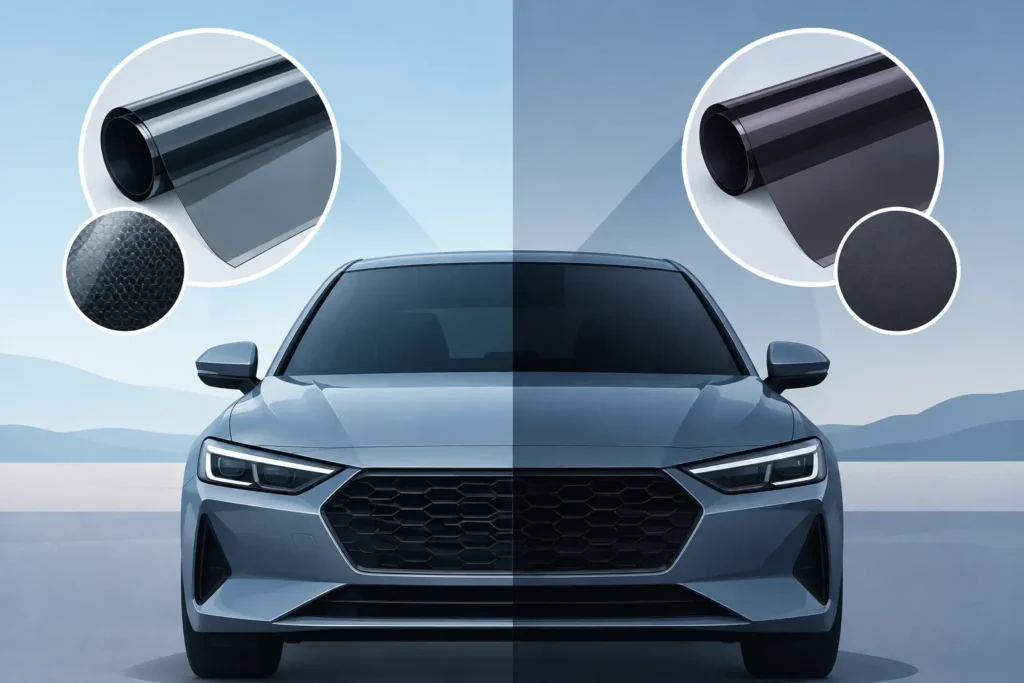
A vehicle can look sharply tinted and still feel uncomfortably hot after an hour in the sun. That is the central difference when comparing ceramic versus dyed car tint: the shade you see from outside is only part of the story. The film’s construction determines how well it manages heat, protects the interior, holds its color, and performs over years of daily driving.
For drivers who want a cleaner look at a sensible price, dyed film can be a practical choice. For those who prioritize cabin comfort, premium protection, and long-term performance, ceramic film is usually the stronger investment. The right answer depends on your vehicle, driving habits, budget, and expectations.
Ceramic Versus Dyed Car Tint: The Core Difference
Dyed window film uses layers of dye to create its darker appearance. The dye absorbs solar energy, reducing visible light and helping limit glare. It is one of the most widely used and affordable tint options, particularly for drivers who want privacy and a more refined exterior appearance without a high upfront cost.
Ceramic tint uses non-metallic ceramic particles within the film. These particles are designed to reject a greater amount of solar heat, including infrared heat, while maintaining excellent clarity. It is not simply a darker film. In fact, a lighter ceramic tint can often outperform a much darker dyed film in heat rejection.
That distinction matters in sunny conditions. A dark dyed film may make the cabin look shaded, yet it can still absorb heat and become warm. A quality ceramic film is designed to reflect and reject more heat before it enters the vehicle, helping keep the cabin more comfortable from the start.
Heat Rejection and Everyday Comfort
Heat control is where ceramic tint earns its premium reputation. It can significantly reduce the intense solar load that builds up through side and rear windows, which means less strain on your air conditioning and a more pleasant drive on bright days.
This is especially valuable for drivers who park outdoors, commute during peak daylight hours, or regularly travel with children, pets, or passengers. Leather seats, steering wheels, and seat belts can become uncomfortable quickly when direct sun enters untreated glass. Ceramic film helps reduce that effect without forcing you to choose the darkest legal shade.
Dyed tint still provides some heat reduction, but it is more limited. Because it works primarily by absorbing heat rather than rejecting it, the glass itself may become hotter. For short city trips or vehicles that are usually garaged, that trade-off may be perfectly acceptable. For a daily driver exposed to strong sun, the difference is easier to notice.
UV Protection Is Not Just a Premium Feature
Both quality dyed and ceramic films can block up to 99% of harmful UV rays. That is good news for drivers who want to protect their skin and preserve interior materials such as leather, vinyl, plastics, and dashboard finishes.
UV protection should not be confused with heat rejection. A film can offer excellent UV blocking while providing only moderate infrared heat control. This is why comparing product specifications matters more than choosing a film based on darkness alone.
A professional consultation should cover both figures. You want to know how the selected film performs against UV exposure, glare, visible light, and solar heat – not just whether it gives the vehicle a darker appearance.
Appearance, Privacy, and Clarity
Dyed film is popular because it produces a classic, dark tinted look. It can add privacy, reduce glare, and give a vehicle a more cohesive finish at an accessible price point. When professionally installed, quality dyed film can look clean and polished on sedans, SUVs, utes, and luxury vehicles alike.
Ceramic film also delivers a premium appearance, but its advantage is flexibility. Because it manages heat so effectively, drivers can choose a lighter shade and still achieve meaningful comfort benefits. This can be useful when you prefer a more open, factory-style appearance or need to remain within local tint regulations.
Ceramic film also tends to offer excellent optical clarity. At night, clearer film can make a real difference, particularly for drivers who regularly use poorly lit roads, parking garages, or suburban streets. No tint eliminates the need for careful night driving, but high-quality film should not create unnecessary haze, distortion, or visual distraction.
Signal Performance: Ceramic Has an Advantage
Some high-performance window films use metallic components. While those films can reject heat effectively, metal can occasionally interfere with radio, GPS, mobile phone, keyless-entry, and in-car connectivity signals.
Ceramic tint is non-metallic, so it is an excellent choice for vehicles with advanced navigation, connected features, electronic toll tags, satellite radio, or multiple devices in regular use. It delivers high heat-rejection performance without creating the signal concerns associated with certain metalized films.
Dyed film is also generally non-metallic and should not interfere with electronics. The difference is that ceramic offers this same signal-friendly performance while delivering stronger solar control.
Durability and Color Stability
A lower-cost dyed tint may fade over time, especially in areas with frequent sunlight exposure. As the dye breaks down, the film can lose its original tone and may develop a purple or uneven appearance. Premium dyed films are more stable than older or bargain-grade products, but they typically do not match ceramic film for long-term color retention.
Ceramic tint is built for durability. Its ceramic particles do not rely on dye to maintain performance, which helps the film retain its appearance and heat-rejection qualities for longer. This makes ceramic a smart option for owners who plan to keep their vehicle for several years or want to protect the resale presentation of a newer car.
Of course, film quality and installation quality both matter. Even the best material needs careful preparation, precise cutting, clean glass, and proper curing to achieve a flawless finish. Poor installation can lead to contamination, bubbling, edge lifting, or uneven alignment regardless of the film type.
Cost: Upfront Price Versus Long-Term Value
Dyed tint is the more budget-friendly choice. It is well suited to drivers whose main goals are privacy, glare reduction, and a darker visual finish. When installed professionally using dependable materials, it can provide excellent value.
Ceramic tint costs more because its materials and performance are more advanced. The additional investment is often worthwhile for people who spend significant time in their vehicles, own a premium vehicle, want better heat rejection, or prefer a film that will maintain its look over the long term.
The best value is not always the lowest initial quote. Consider how the film will perform through hot summers, how often the vehicle is parked outside, and whether you would be disappointed if a lower-priced film faded or failed to deliver the comfort you expected.
Which Tint Is Right for You?
Choose dyed tint if you want an affordable, professional-looking upgrade with added privacy, glare reduction, and reliable UV protection. It is a sensible option for budget-conscious drivers and vehicles that do not face prolonged sun exposure.
Choose ceramic tint if comfort is a priority. It is particularly well suited to daily commuters, family vehicles, luxury cars, dark interiors, and any vehicle that spends long periods in direct sun. Its higher heat rejection, optical clarity, color stability, and non-metallic construction deliver premium results that are easy to appreciate every time you get behind the wheel.
Before selecting a shade, check the window-tint laws that apply where your vehicle is registered. Legal limits can vary by state and window position, and a professional installer can help you choose a film that balances privacy, appearance, and compliant visibility.
A good tint should do more than make your vehicle look better in the driveway. Choose the film that will make every drive cooler, clearer, and more comfortable long after the installation is complete.