
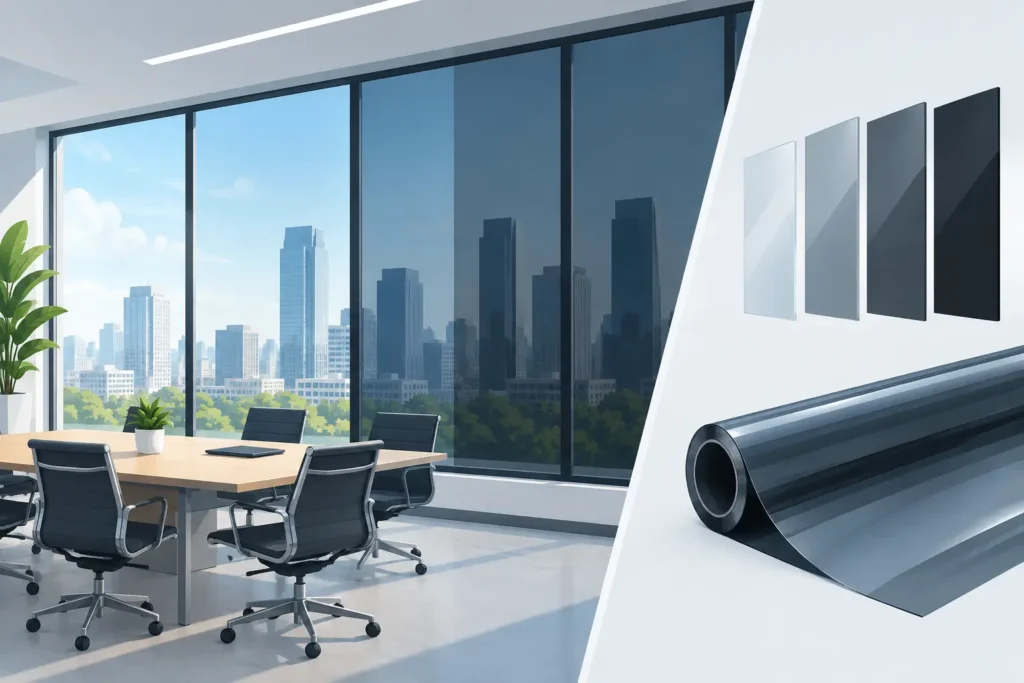
The wrong window film can leave a workplace too dark, too reflective, or still uncomfortably hot when the afternoon sun hits. The right film can make a noticeable difference to comfort, privacy, operating costs, and the way your premises present to clients. This commercial window film selection guide explains how to assess your glass, define the result you need, and choose a professional solution that performs for years.
Commercial film is not a one-size-fits-all product. A bright street-facing office, a glass-walled meeting room, a retail storefront, and a warehouse each have different priorities. Starting with the problem you want to solve leads to a better-looking installation and stronger long-term value.
Start With the Main Problem, Not the Darkest Film
Many business owners begin by asking for a darker tint. Sometimes that is appropriate, but darkness alone does not determine how well a film controls heat, blocks glare, or protects people and property. A premium light-colored solar film may reject more heat than a basic dark film while keeping the space brighter and more open.
Consider what affects your team, customers, or premises most during the day. Is the office hot near west-facing windows? Are computer screens difficult to see? Does street-level glass expose meeting rooms to passersby? Are you protecting valuable stock, furnishings, or people in a high-traffic area?
Your priority will usually fall into one or more of these areas:
- Heat and glare reduction
- UV protection for interiors and merchandise
- Daytime privacy or visual screening
- Safety and security for vulnerable glass
- A more polished, consistent appearance
A professional consultation should account for all of these factors rather than treating window film as a purely cosmetic upgrade.
Understand the Main Types of Commercial Window Film
Solar Control Film for Heat, Glare, and Energy Use
Solar window film is the most practical choice for offices, shops, medical practices, and commercial spaces with large areas of sun-exposed glass. It reduces solar heat gain, softens harsh glare, and filters UV rays that can fade flooring, furniture, displays, and artwork.
The best option depends on the orientation of your building and the amount of natural light you want to retain. West- and north-facing glass in sunny locations often needs stronger heat rejection than shaded windows. A reflective or darker film can provide excellent solar performance and daytime privacy, while neutral and spectrally selective films offer a more subtle finish with higher visible light transmission.
There is a trade-off. Stronger solar control may slightly change the look of the glass from inside or outside, especially with highly reflective film. For customer-facing businesses that rely on clear views and abundant daylight, a lighter premium film can be the better balance.
Safety and Security Film for Stronger Glass
Safety window film helps hold broken glass together after accidental impact, vandalism, severe weather, or an attempted break-in. It does not make glass indestructible, and it should not be presented as a substitute for physical security measures. What it can do is reduce the speed and spread of shattered glass, helping protect occupants and limiting mess and damage.
This makes it a smart consideration for street-facing storefronts, schools, offices with accessible ground-floor windows, glass doors, and areas where people work close to large panes of glass. The film thickness, attachment method, and glass type all matter. Safety applications need an experienced assessment because the right system depends on the risk level and the construction of the existing glazing.
Clear safety film is ideal when you want added protection without changing the appearance of your windows. Tinted safety options can combine security benefits with solar control where both are needed.
Decorative and Frosted Film for Privacy and Branding
Decorative window film gives commercial interiors privacy without the expense and permanence of replacing glass or installing solid partitions. Frosted and etched-look films are popular for meeting rooms, clinics, reception areas, internal glass walls, and bathrooms. They allow light to pass through while limiting direct visibility.
The design can be simple, such as a clean frosted band across eye level, or more customized with patterns, shapes, or business branding. For a professional finish, the layout needs to match the room’s sightlines and the height of seated and standing occupants. A full frosted panel may be suitable for a consultation room, while a partial design can maintain openness in a boardroom.
Decorative film is mainly a privacy and appearance solution. If heat, glare, or impact protection is also a concern, discuss whether a combined product or separate treatment is required.
Check Your Glass Before Choosing a Film
A commercial window film selection guide should always include the glass itself. Not every film is suitable for every glazing system. Applying the wrong product to certain glass types can increase thermal stress and, in some cases, raise the risk of glass breakage.
Your installer should identify whether the windows are single-pane, double-pane, laminated, tempered, low-emissivity, or part of a specialty glazing system. They should also assess the pane size, frame condition, existing damage, external shading, and whether the glass receives concentrated sunlight from nearby buildings or reflective surfaces.
This assessment matters particularly for older premises and buildings with insulated glass units. A film that performs well on one window may not be appropriate for another location in the same building. Premium materials and accurate compatibility checks protect both the glass and the result.
Compare Performance Numbers That Actually Matter
Film specifications can feel technical, but a few measurements make comparison easier. Visible light transmission tells you how much daylight passes through the film. Lower transmission generally means a darker appearance, but it is not a direct measure of heat control.
Solar heat gain reduction and total solar energy rejected indicate how effectively a film reduces solar heat entering through the glass. For offices with direct afternoon sun, these figures are often more useful than shade alone. Glare reduction is important for screen-heavy workspaces, while UV rejection helps protect interiors from fading.
Also ask how the film looks from both sides of the glass during the day and at night. A reflective film may provide strong daytime privacy when the exterior is brighter than the interior. Once indoor lights are on after dark, that privacy effect can reverse. If round-the-clock privacy is essential, decorative frosting, blinds, or another treatment may be needed alongside solar film.
Consider How the Film Supports Your Workplace Design
A commercial film installation should feel intentional, not like an afterthought. The film color, reflectivity, and finish influence how a building looks from the street and how employees experience the space from within.
Neutral films often suit professional offices that want a refined appearance without a dramatic visual change. Reflective films can create a sleek exterior and improve daytime privacy, but they may not align with every building style or strata requirement. Decorative film can reinforce a brand’s visual identity while defining private zones in open-plan spaces.
For leased premises, check lease conditions and building management requirements before installation. Exterior appearance rules, heritage considerations, and landlord approvals can affect the suitable product. Addressing this early avoids delays and helps ensure the finished project meets expectations.
Choose Professional Installation Over Short-Term Savings
Commercial window film is only as effective as its installation. Clean preparation, precise cutting, careful edge finishing, and correct curing conditions all affect how the film performs and how it looks over time. Poor installation can lead to bubbles, lifting edges, contamination, uneven lines, and a finish that undermines an otherwise polished workplace.
An expert team will measure each pane, recommend compatible premium materials, explain realistic performance outcomes, and schedule work to minimize disruption. For active offices, retail stores, and medical practices, installation can often be planned around trading hours or lower-traffic periods.
Ask about the manufacturer warranty and the installer’s workmanship warranty. You should also receive clear care guidance. Most films need time to cure fully, and a temporary hazy appearance or small water pockets can be normal during that period. Avoid aggressive cleaners and abrasive tools that could damage the surface.
Plan for the Rooms That Need It Most
You do not always need to film every window at once. Targeting the hottest perimeter offices, sun-exposed meeting rooms, customer waiting areas, and vulnerable entry glass can deliver meaningful improvements while keeping the project focused.
Walk through the space at different times of day before making a decision. Notice where staff close blinds, move desks away from windows, struggle with glare on monitors, or avoid seats because of heat. Those everyday habits reveal where window film can have the greatest impact.
The best commercial window film is the one that solves a specific workplace problem without compromising the light, appearance, or function your business values. A tailored assessment gives you the confidence to invest in a finish that feels right from the first workday and continues protecting your space long after installation.
FAQs
1. How do I choose the right commercial window film?
Start by identifying the main issue you want to solve, such as heat, glare, privacy, UV exposure, or glass safety. Then consider your glass type, building orientation, desired natural light levels, and appearance requirements before selecting a film.
2. Does darker window film provide better heat protection?
Not necessarily. Film performance depends on factors such as solar energy rejection and visible light transmission, not simply how dark the film looks. A high-performance light or neutral film can provide strong heat control while retaining more natural daylight.
3. Can window film be applied to double-glazed or Low-E glass?
Some films are compatible with double-glazed and Low-E glass, but compatibility should be checked before installation. The glass construction, film specifications, and exposure conditions can affect thermal stress and glass performance, so a professional assessment is recommended.
4. Does commercial window film provide privacy at night?
Not always. Reflective solar films generally provide greater privacy when the outside is brighter than the inside. At night, interior lighting can reduce or reverse this effect. For consistent privacy, frosted film, blinds, or another complementary treatment may be more suitable.
5. How long does commercial window film last?
The lifespan depends on the film quality, glass exposure, installation, and environmental conditions. Professional installation and proper maintenance can help the film perform well for many years. Always check the manufacturer’s warranty and the installer’s workmanship warranty before choosing a product.