
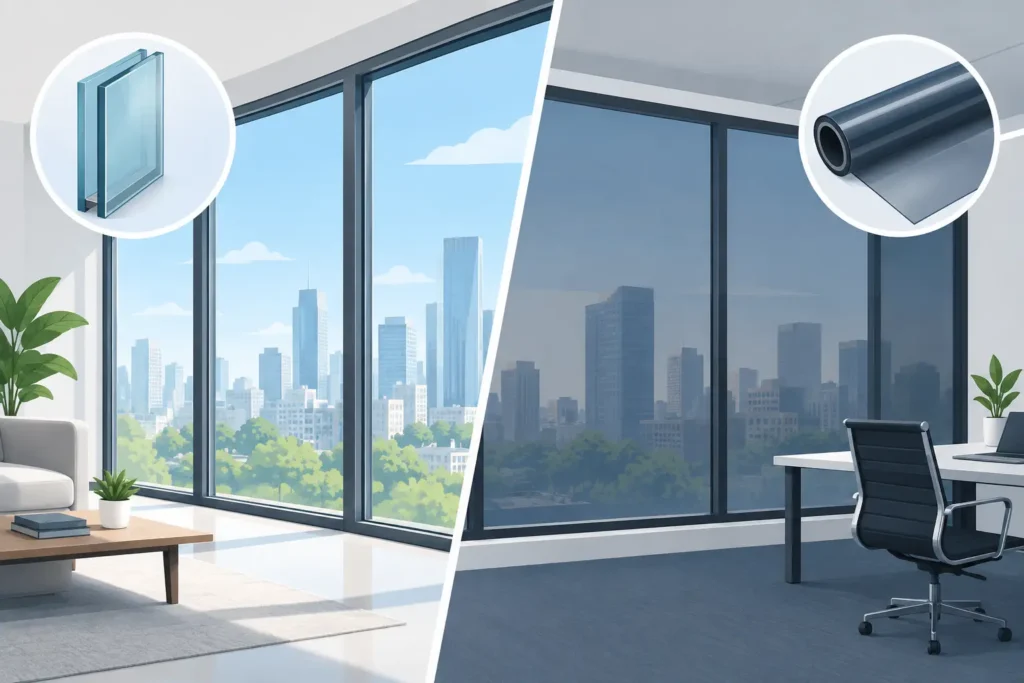
A west-facing room that turns uncomfortable by midafternoon, a glare-filled office, or a vehicle cabin that feels harsh in summer usually calls for more than blinds. The choice often comes down to glazing versus film: replacing or upgrading the glass itself, or improving the glass you already have with professionally installed window film. Both can deliver meaningful gains in comfort, privacy, and protection, but they suit different buildings, budgets, and objectives.
For most existing homes, offices, vehicles, and boats, window film is the practical starting point. New glazing can be an excellent investment when windows are already due for replacement or a renovation is underway. The right answer depends on what your glass needs to do, not simply how it looks.
What Glazing and Window Film Actually Change
Glazing refers to the glass system in a window. It may be single-pane glass, insulated double glazing, laminated safety glass, tinted glass, or glass with a factory-applied low-emissivity coating. Replacing glazing can improve insulation, reduce heat transfer, improve acoustic performance, and change the appearance of a window at the same time.
Window film is a high-performance layer applied to the inside surface of existing glass. Modern solar-control films can reject a significant amount of solar heat, reduce glare, block up to 99% of UV rays, and preserve natural light. Other specialist films can add privacy, decorative frosting, or a layer of safety and security performance.
The distinction matters. Glazing changes the window unit. Film upgrades the performance of the existing glass without the disruption and cost of removing frames, glass, or surrounding finishes.
Glazing Versus Film for Heat and Energy Control
If heat loss in winter is your main issue, high-quality insulated glazing generally has the stronger advantage. Double glazing and low-e glass are designed to reduce conductive heat transfer through the entire window system. For a new build or a full window replacement, that can be a worthwhile long-term decision.
Solar heat is a different challenge. In sun-exposed rooms, much of the discomfort comes from direct solar radiation passing through the glass. Premium solar window film can make a dramatic difference by rejecting solar energy before it becomes trapped inside. It is especially effective on large existing windows facing west or north, where afternoon heat and glare can place extra pressure on air conditioning.
That is why film is often the more targeted solution for Sydney properties. A home may have sound, well-sealed windows but still suffer from intense sun through a living-room wall of glass. Replacing those windows solely for solar control can be costly. The right film can improve comfort quickly while helping reduce cooling demand.
Film is not a substitute for failed seals, damaged frames, or severely inefficient single-pane windows in every situation. If condensation, drafts, water ingress, or failing hardware are part of the problem, the window itself may need attention first. A professional assessment should look at the whole system, not just the pane.
UV Protection and Interior Preservation
Sunlight can fade timber floors, rugs, artwork, upholstery, and retail displays long before the damage becomes obvious. Both specialty glazing and window film can reduce UV exposure, but film provides a highly accessible way to protect existing interiors.
Clear or lightly tinted films are a strong choice when you want protection without noticeably darkening the view. More reflective or darker films can offer increased heat and glare reduction, although they may change the external appearance of the glass and reduce visible light. The best choice balances the room’s orientation, its use, and the finish you want to achieve.
For offices, this can mean fewer hot desks near windows and less glare on monitors. For homes, it can mean enjoying natural light without sacrificing furnishings to the sun. For vehicles and boats, quality film helps protect interiors that are exposed every day.
Privacy, Appearance, and Light
Glazing can create privacy through tinted, obscured, patterned, or frosted glass. It is durable and visually integrated, making it a natural option during construction or major remodeling. However, it is permanent. If the room’s use changes later, changing the privacy level usually means replacing the glass again.
Window film offers more flexibility. Frosted and decorative films are popular for bathrooms, entry sidelights, office partitions, meeting rooms, and street-facing glass. They can create privacy while still allowing daylight into the space. Solar and reflective films can also reduce daytime visibility into a room, though it is essential to understand that this effect may reverse at night when interior lights are brighter than outdoors.
For drivers, film can provide a more refined appearance and improved daytime privacy, but it must comply with applicable tint laws. A professional installer can recommend a legal film option that delivers the desired look without creating compliance issues or compromising visibility.
Cost and Installation: The Practical Difference
Replacing glazing is a construction project. Costs can include new glass units, frame work, labor, permits where required, disposal, and repairs to finishes around the opening. Timelines may extend when custom-sized units are needed, especially for larger commercial glass panels or specialty residential windows.
Film installation is typically faster, cleaner, and less disruptive. In many cases, it can be completed without disturbing frames, blinds, furniture, or daily operations beyond the immediate work area. That makes it particularly attractive for occupied homes, busy offices, retail environments, and fleet vehicles.
Lower upfront cost does not mean choosing a lower-quality result. Film performance depends heavily on material quality, correct product selection, glass compatibility, and installation technique. Premium films and an expert installation team help deliver an even finish, clean edges, reliable adhesion, and performance that lasts.
Safety and Security Considerations
Laminated glazing is built with an interlayer that helps hold broken glass together. It is often specified where impact resistance, safety, or noise reduction is important. If you are replacing glass anyway, it may be the right time to consider laminated options.
Safety and security window film can improve the behavior of existing glass by helping retain fragments after breakage. It can be a valuable addition for ground-floor windows, glass doors, storefronts, offices, and areas where accidental impact is a concern. It does not make ordinary glass indestructible, and it should not be described as a replacement for purpose-designed security glazing where a high threat level exists.
The same principle applies to solar film: not every film is suitable for every pane. Some glass types, existing coatings, and window constructions require careful product selection to manage thermal stress. Professional advice protects both the glass and the warranty.
When New Glazing Makes More Sense
New glazing is generally the stronger choice when you are building, remodeling extensively, replacing damaged windows, or dealing with poor frames and air leakage. It is also worth considering when winter insulation, acoustic performance, and whole-window efficiency are equal priorities.
For heritage properties or buildings with specialized architectural requirements, replacement glass may need careful planning to preserve the original appearance. In commercial projects, glazing upgrades may also be tied to facade requirements, building codes, or broader energy-efficiency work.
Even then, film can still have a role. A new glazing system may provide excellent insulation but leave a particular facade exposed to glare or high solar load. A carefully selected film can fine-tune comfort where occupants need it most.
When Window Film Is the Better Upgrade
Film is an outstanding fit when the glass is in good condition but its performance falls short. It is especially useful for rooms that overheat, spaces with harsh glare, interiors at risk of fading, and buildings that need more privacy without losing daylight.
It also suits property owners who want a premium improvement without the expense and disruption of full window replacement. For a home, office, car, or boat, the benefits are immediate: cooler interiors, greater visual comfort, UV protection, and a cleaner, more polished appearance.
The best results come from matching the film to the application. A bright living room needs a different solution from a street-facing conference room, a boat cabin, or a high-performance vehicle. Prestige Tinting takes this tailored approach, using premium materials and experienced installation to deliver top-quality results rather than a one-size-fits-all tint.
Before committing to either option, consider where the sun hits, how the room or vehicle is used, how much natural light you want to retain, and whether privacy, safety, or energy costs are the priority. A clear assessment of the existing glass can turn a frustrating hot spot into one of the most comfortable spaces you use.