
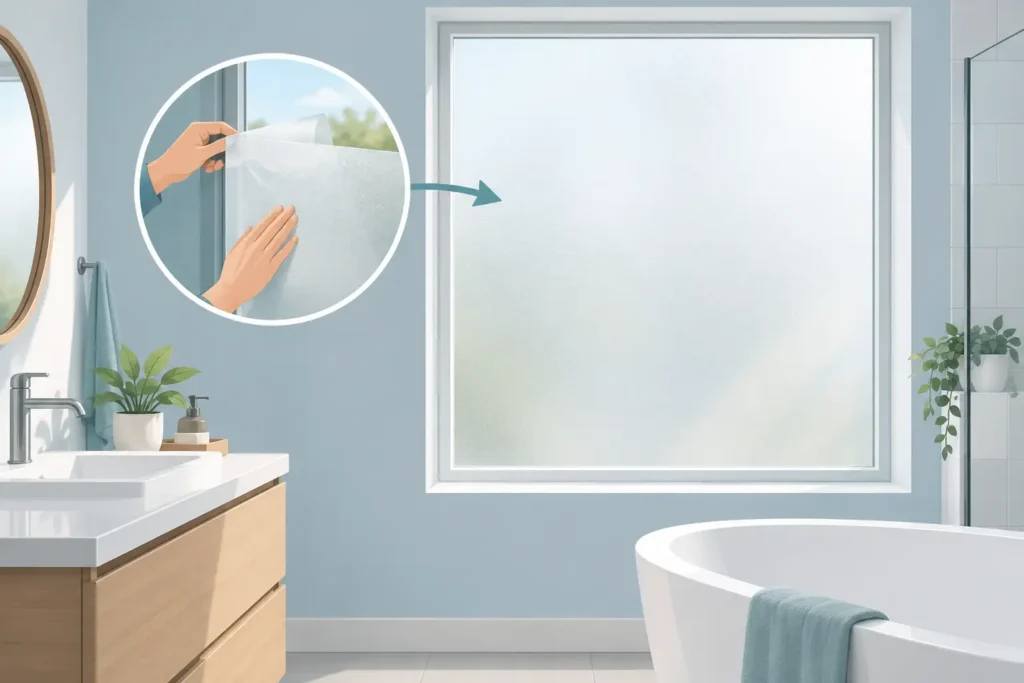
A bathroom window can bring in beautiful natural light, but it should not leave you feeling exposed. Knowing how to frost bathroom windows helps you keep the daylight while creating the privacy a bathroom requires. The right solution also needs to handle moisture, regular cleaning, and close-up visibility – especially in homes where windows face a neighboring property, street, or shared side passage.
For most homeowners, frosted window film offers the best balance of privacy, appearance, and flexibility. It creates an even, polished finish without permanently altering the glass. Still, spray frosting and etched glass each have their place. The best choice depends on whether you want a quick temporary fix, a permanent design feature, or a premium result installed to last.
Why frost a bathroom window?
Clear bathroom glass often creates an awkward choice: close the blinds and lose the light, or leave them open and sacrifice privacy. Frosting solves that problem by obscuring the view through the glass while allowing daylight to pass into the room.
A quality frosted finish can also make a bathroom feel more considered. It softens harsh exterior views, gives plain glass a clean architectural look, and can conceal an unattractive fence, wall, or neighboring window. In Sydney homes, it is especially useful for bathrooms close to lot boundaries or exposed to strong afternoon sun.
Privacy is not always absolute, however. Standard frosted glass and frosted film prevent clear views, but people and objects may still appear as soft shadows when there is strong light behind them. For a ground-floor bathroom or a window positioned at eye level, choose a denser privacy film or frost the full pane rather than only the lower section.
How to frost bathroom windows with window film
Decorative frosted film is applied directly to the inside surface of the glass. It is a popular option because it delivers a consistent satin or etched-glass appearance without replacing the window. Premium films are designed for long-term adhesion and can be removed or replaced later if your style changes.
Before choosing a film, consider where privacy is needed. A window above shoulder height may only need a lower band of frosting, preserving a clear view of the sky. A bathroom window near a walkway, neighboring balcony, or outdoor entertaining area will usually benefit from full coverage. The film can also be cut into stripes, geometric patterns, or custom shapes where a more decorative finish suits the space.
Measure the glass, not just the frame
For a neat result, measure the visible glass area carefully. Many window frames have rubber seals, bevels, or narrow edges that change the usable surface. Film should be cut slightly larger than the final size, then trimmed precisely after it is positioned on the wet glass.
If the pane has textured glass, chips, old adhesive, or heavy mineral buildup, address those issues first. Frosting film needs a clean, smooth surface for the best bond and appearance. It will not hide every imperfection beneath it.
Clean thoroughly before application
Any dust, hair, soap residue, or cleaner left on the glass can become trapped beneath the film. Clean the window with a glass-safe solution, then use a scraper suitable for glass to remove stubborn residue. Wipe the edges, frames, and sill as well, since loose debris can fall onto the wet glass during installation.
Avoid applying film in a steamy bathroom immediately after a shower. Work when the glass and room are cool and dry, and allow enough time for the film to settle before exposing it to heavy moisture.
Apply with water and a squeegee
Most adhesive window films are installed using a slip solution – typically clean water with a small amount of mild soap. The glass is sprayed generously, the liner is removed from the film, and the adhesive side is also kept wet. This lets the film slide into position before it is pressed down.
Use a firm squeegee, working from the center outward, to push water and air toward the edges. Continue until the surface lies flat and clear of bubbles. Then trim the perimeter cleanly, leaving a very small gap around the edge so moisture does not force the film upward over time.
The finish may look slightly hazy while residual moisture dries. That is normal. Depending on the weather, glass temperature, and film type, full curing can take several days or longer. Do not pick at the corners during this period.
Professional installation is worthwhile when the bathroom has large panes, difficult-to-reach windows, complex frames, or a highly visible location. An expert installer can recommend the right opacity, account for the glass type, and deliver crisp edges with no trapped debris or uneven trimming.
Other ways to frost bathroom windows
Window film is not the only method. Each alternative has advantages, but the trade-offs are worth understanding before you commit.
Frosted glass spray
Frosted glass spray is a low-cost DIY option sold in aerosol cans. It is applied directly to the glass in light coats, building up opacity over several passes. It can be useful for a rental-friendly short-term project or a small obscure pane where perfection is less critical.
Its downside is durability. Bathroom humidity, frequent wiping, and cleaning products can cause sprayed finishes to wear, streak, or chip. Achieving an even look on a large window takes patience, and touch-ups may be noticeable. It is also harder to remove cleanly than many people expect.
Acid etching or professionally etched glass
Etched glass gives a permanent frosted appearance. Professional etching can create an elegant finish and custom patterns, making it suitable for high-end renovations or new glazing. Because the surface itself is altered, there is no film edge to lift and no coating to peel.
The limitation is permanence. Once the glass is etched, changing the design is expensive and may require replacing the pane. DIY chemical etching products are also not appropriate for many homeowners due to safety concerns and inconsistent results. For a permanent feature, professionally manufactured frosted glass is generally the more reliable path.
Replace the pane with obscure glass
Replacing clear glass with obscure, textured, or laminated privacy glass can be an excellent solution during a full bathroom remodel. It is durable, integrated into the window, and available in many patterns. Some styles offer strong privacy while still admitting plenty of light.
This approach costs more than film and is rarely necessary if the existing glass is in good condition. It makes the most sense when the window needs replacement anyway or when building requirements call for a particular glass specification.
Choosing the right level of privacy
Not all frosted finishes look or perform the same. A light etched film creates a soft decorative effect but may show stronger silhouettes at night. A white matte film offers more privacy, while patterned films can balance partial visibility with visual interest.
Think about the view from outside during both day and night. In daylight, the brighter outdoors often makes it difficult to see into the bathroom. At night, interior lighting reverses that effect. Stand outside or ask someone to check the window after dark before choosing a partial-frost design.
If the bathroom gets intense sun, consider combining privacy film with a solar-control film solution where appropriate. This can reduce glare and help manage heat, although the exact film choice should suit the glass type and the amount of natural light you want to retain.
Caring for frosted bathroom window film
Once fully cured, frosted film is simple to maintain. Clean it with a soft microfiber cloth and a mild, non-abrasive cleaner. Avoid rough scouring pads, razor blades, and harsh chemicals, which can scratch the surface or damage the edges.
Good ventilation also helps. Run the exhaust fan during and after showers, wipe down excessive condensation when needed, and keep silicone, grout haze, and bathroom sprays away from film edges. Properly installed premium film should remain smooth and attractive for years, but the bathroom environment is demanding, so quality materials and careful fitting matter.
A bathroom should feel private without becoming dark or closed in. Whether you choose full frosted film, a subtle patterned band, or replacement obscure glass, aim for a solution that gives you confidence at night and welcoming natural light during the day. For a refined, long-lasting finish on valuable glass, Prestige Tinting can help match the privacy level and style to your home.