
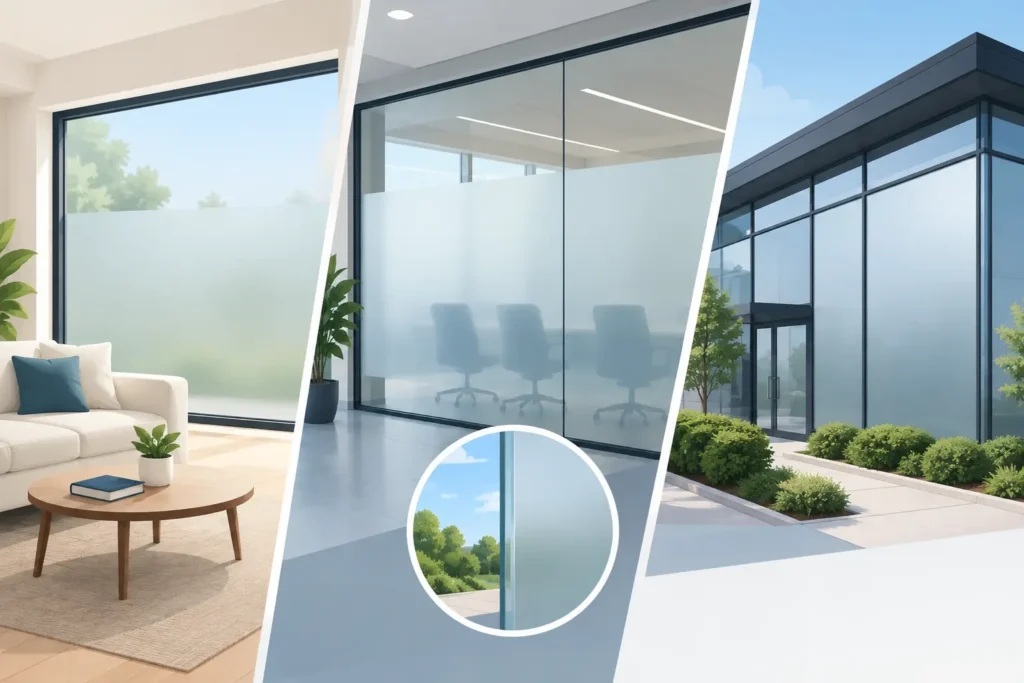
A street-facing bathroom, a meeting room with clear glass walls, or a boat cabin visible from the marina can all feel more exposed than they should. Privacy glazing gives you control over what can be seen through glass while retaining the daylight, open feel, and polished appearance that make glass such a valuable design feature.
For Sydney homes, workplaces, vehicles, and boats, the right treatment is not simply about making windows darker. It is about matching visibility, light, heat, and appearance to the way a space is actually used. A professional recommendation makes that balance far easier to achieve.
What Is Privacy Glazing?
Privacy glazing is a broad term for glass treatments that reduce visibility through a window or glass panel. Depending on the setting, this can include frosted window film, decorative film, tinted film, one-way reflective film, or purpose-made obscured glass. Window film is often the practical choice when you want to improve existing glass without the cost, disruption, and waste of replacing it.
The best option depends on what kind of privacy you need. Some films obscure views in both directions at all times. Others offer daytime privacy by making the exterior side more reflective than the interior. Some are designed primarily for a refined decorative finish, while others combine privacy with solar control, UV protection, or added safety benefits.
That difference matters. A glass treatment that looks excellent in a bright office may not provide the right privacy in a bedroom after dark. An experienced installer will assess sightlines, surrounding light, and the purpose of the room before recommending a film.
Where Privacy Glazing Makes the Biggest Difference
Bathrooms, bedrooms, and street-facing rooms
Frosted or decorative window film is a popular solution for bathroom windows, shower screens, sidelights, and bedroom glass that faces a neighboring property or busy street. It softens or blocks the view without forcing you to close blinds through the day.
This is especially useful where the window is close to a boundary, overlooks a walkway, or sits at eye level. Full frosting creates consistent privacy, while partial frosting can cover the lower section of a window and preserve a clearer view of the sky or garden above.
Office partitions and meeting rooms
Modern workplaces often use internal glass to make spaces feel brighter and more connected. The trade-off is that clear panels can leave staff and visitors feeling on display. Frosted privacy film creates discretion for meeting rooms, consulting areas, and executive offices while keeping the workplace light and professional.
It can also be cut or designed to include stripes, bands, patterns, or business branding. A well-planned treatment makes glass partitions more functional without making an office feel closed in.
Retail, medical, and customer-facing spaces
Privacy needs are often higher in consulting rooms, treatment spaces, salons, reception areas, and back-of-house windows. Decorative frosting can separate public and private areas with a clean finish that suits the business interior.
For storefronts, the goal may be more selective. You may want to shield a storage area, screen, or workstation while maintaining visibility to displays and signage. Film can be placed exactly where it is needed rather than covering every pane of glass.
Vehicles and boats
Window tinting can improve privacy for drivers and passengers by reducing outside visibility into a vehicle. It also adds a more refined appearance and can help reduce glare, heat, and UV exposure. However, automotive tint must meet applicable legal requirements for visible light transmission, particularly on front windows and windshields.
On boats, privacy film can make cabins feel more private at the dock or on the water while helping manage intense sun and glare. Marine-grade installation experience is valuable because boat glass, curved surfaces, moisture, and sun exposure demand careful material selection and a flawless finish.
Choosing the Right Type of Privacy Film
The most suitable privacy glazing starts with an honest answer to one question: when do you need privacy most? Daytime, nighttime, all the time, or only in a specific part of the glass?
Frosted film is the reliable option for constant privacy. It diffuses light and obscures the view from both sides, making it ideal for bathrooms, internal partitions, and glass doors. It does reduce visual clarity, so it is not the right choice where you want to retain an outward view.
Reflective and darker solar films can provide useful daytime privacy. In daylight, the brighter exterior creates a mirror-like effect that makes it harder for people outside to see in. At night, that effect reverses if lights are on inside and it is darker outdoors. Curtains, blinds, or another layer of coverage may still be needed for complete nighttime privacy.
Decorative films offer the widest design flexibility. They can mimic etched glass, add subtle texture, create geometric patterns, or provide custom bands across glass walls. They are a strong choice when privacy and presentation are equally important.
For homes and commercial spaces exposed to strong sun, a combined solar and privacy film may be the better investment. It can reduce glare and solar heat while protecting furnishings, floors, merchandise, and interior finishes from fading caused by UV exposure. The precise performance will vary by film type and the existing glass, so product selection should be based on the window’s orientation and exposure rather than appearance alone.
Privacy, Light, and Heat: Getting the Balance Right
Many property owners assume privacy means sacrificing daylight. That does not have to be the case. Frosted finishes still allow generous natural light to pass through, while strategically applied film can leave upper panes or selected sections clear.
The balance is more complex with tinted and reflective films. A darker film generally provides more glare reduction and a stronger tinted look, but it may reduce visible light inside. This can be welcome in a hot, west-facing room or a sun-drenched office, yet less suitable for a naturally dark living area.
Glass type also matters. Double-pane, laminated, tempered, and specialty glass can have different compatibility requirements. Applying an unsuitable film can increase thermal stress in certain conditions. Professional assessment protects the glass, helps preserve manufacturer warranties where applicable, and ensures the chosen film performs as intended.
Why Professional Installation Matters
Privacy window film is highly visible when it is installed poorly. Uneven edges, trapped dust, bubbles, misaligned patterns, or gaps around frames can undermine the entire appearance of a room or vehicle.
Professional installation begins with careful measuring, thorough glass preparation, and precise cutting. On decorative or frosted films, pattern alignment is particularly important across doors, partitions, and adjoining panels. The installer should also consider handles, frames, seals, curved glass, and how the film will look from both sides.
Premium materials matter just as much as technique. Quality film is designed to maintain its finish, adhesion, and appearance over time when it is correctly selected and installed. At Prestige Tinting, our expert team recommends privacy solutions around the practical demands of each project, from a single bathroom window to a complete office fit-out, vehicle, or boat.
A Smarter Way to Plan Your Privacy Upgrade
Before selecting a film, stand both inside and outside the space at different times of day. Notice where people can see in, whether neighboring windows create direct sightlines, and how sunlight moves across the glass. Think about whether you need to preserve a view, reduce glare, improve comfort, or simply create a more polished look.
It also helps to consider the future use of the space. A home office may later become a nursery. A clear meeting room may need more confidentiality as a business grows. Window film is a flexible upgrade that can be tailored to those changes without replacing the glass itself.
The right privacy glazing should feel like it has always belonged there: brighter where you want light, more private where it matters, and finished to a standard that improves the whole space.