
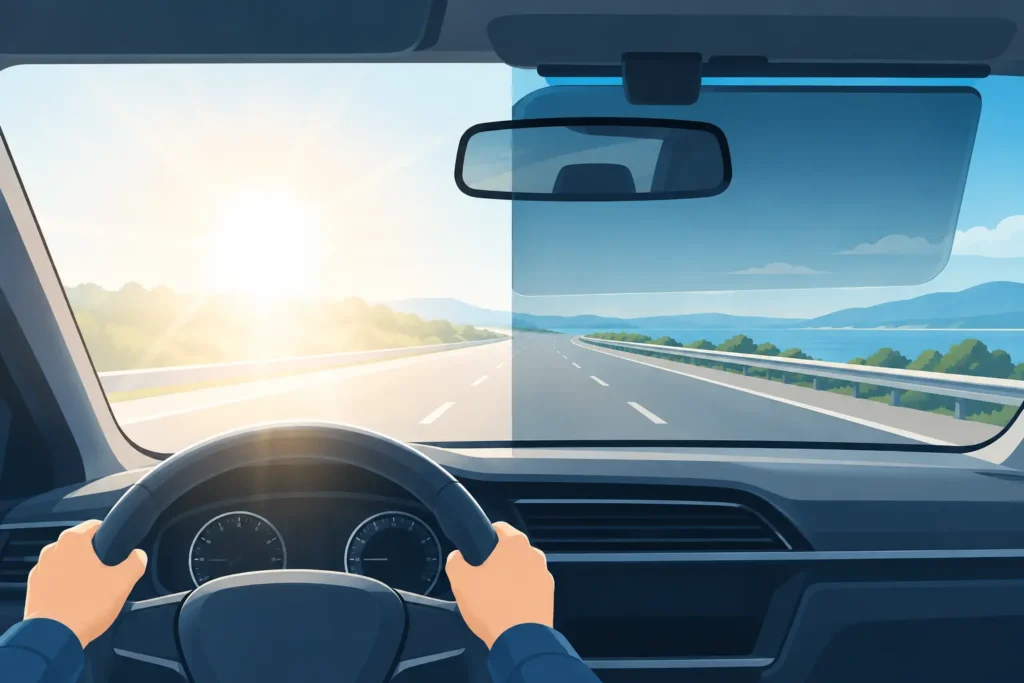
A low winter sun on a Sydney morning, headlights reflecting off wet pavement, or bright light bouncing from a white vehicle can turn a familiar drive into a tiring one. To reduce windshield glare effectively, drivers need more than a quick wipe of the glass. Clear vision comes from clean surfaces, the right driving setup, and legal window-film choices that manage harsh light without compromising safety.
Glare is not simply uncomfortable. It can hide pedestrians, lane markings, cyclists, brake lights, and changes in traffic conditions for those few seconds when fast decisions matter most. The right solution depends on where the glare is coming from and when it happens.
Why windshield glare becomes a driving problem
Windshield glare occurs when direct or reflected light overwhelms your eyes. It is common at sunrise and sunset, but it can also happen at night when headlights scatter through dust, haze, scratches, or moisture on the glass.
The windshield itself is often only part of the issue. A dirty dashboard can reflect onto the inside of the glass. Worn wiper blades can leave a film that catches headlights. Fingerprints and residue on the interior surface can create a hazy veil that is especially noticeable after dark.
Drivers may also notice glare more strongly after a long day, when tired eyes adapt more slowly to changing light. Older drivers and anyone with a vision condition may be particularly sensitive. That is why managing glare should be treated as a practical safety improvement, not just a comfort upgrade.
Start with clearer glass inside and out
A clean windshield gives every other glare-reduction measure a better chance of working. Wash the exterior glass regularly to remove road grime, salt spray, tree sap, insect residue, and oily traffic film. These contaminants scatter light instead of allowing it to pass cleanly through the windshield.
The inside matters just as much. Dashboard cleaners, off-gassing from interior materials, and everyday fingerprints can leave an invisible residue on the glass. Use a quality automotive glass cleaner and a clean microfiber towel, then finish with a second dry towel to avoid streaks. Avoid cleaning in direct sun where possible, because product can dry before it is properly buffed away.
Inspect the windshield when it is clean. Fine scratches, stone chips, and worn areas can spread light across your field of vision. Small chips may be repairable, while extensive pitting or deep scratches can mean replacement is the safer choice. A professional assessment can help separate a surface-cleaning issue from damage that needs attention.
Use your visor and mirrors properly
The sun visor is one of the simplest tools in the vehicle, yet many drivers leave it in the same position regardless of the sun’s angle. Lower it enough to block direct sun while keeping your view of traffic signals and the road clear. If the sun is coming from the side, move the visor to the side window position when your vehicle allows it.
Your rearview mirror should also be adjusted to reduce nighttime headlight glare. Most manual mirrors have a day-night tab that changes the angle of reflected light. If your vehicle has an auto-dimming mirror, make sure it is functioning properly and is not obstructed.
These adjustments will not eliminate every reflection, but they can make a meaningful difference during the moments glare is most intense. They are particularly helpful on open roads, bridges, waterfront routes, and wide suburban streets where low sun has few buildings to block it.
Choose sunglasses that improve, rather than distort, vision
Quality sunglasses are one of the most effective ways to reduce windshield glare in daylight. Polarized lenses can be especially useful because they reduce reflected glare from wet roads, car hoods, water, and other flat surfaces. For many drivers, that means less squinting and less eye fatigue on long trips.
There is a trade-off to consider. Polarized lenses can make some LCD or digital displays harder to read at certain angles. Check how your vehicle’s instrument panel, navigation screen, and phone mount appear before relying on a new pair for daily driving.
Choose lenses with full UV protection and a tint that is suitable for changing conditions. Very dark sunglasses can be uncomfortable or unsafe in tunnels, heavy shade, or late-afternoon light. Keep a clean pair in the car, ideally in a case, since scratched lenses can create their own glare problems.
Reduce reflections inside the cabin
The dashboard can create a surprising amount of windshield reflection, especially if it has a shiny finish or has been treated with a glossy protectant. Matte dashboard products are usually a better choice for drivers who regularly deal with bright sun.
Keep pale papers, bright objects, and reflective accessories off the dash. A light-colored towel, a glossy phone case, or a metallic ornament may seem minor, but all can reflect into the windshield at the wrong angle. A fitted, non-reflective dashboard mat may help in some vehicles, provided it does not interfere with airbags, sensors, or visibility.
Clean wiper blades and a properly filled washer reservoir also matter. When rain starts after a dry spell, wipers can smear built-up grime across the windshield. Replacing worn blades before they chatter or streak is a simple way to maintain a clearer view in wet weather.
Can window film reduce windshield glare?
Professional window film can make a major difference to comfort and glare control, but the windshield is not usually the place for a dark tint. Regulations commonly limit what can be applied to the front windshield and front side windows, and legal requirements vary by location. A professional installer should always recommend a film solution that complies with applicable vehicle rules.
For most cars, treating the side and rear windows is the more practical approach. Premium automotive window film can reduce solar heat, filter UV exposure, and soften the intense side glare that reaches the driver and passengers. It can also make the cabin feel more comfortable during hot, bright conditions, reducing the urge to blast the air conditioning after the car has been parked in the sun.
The result depends on the film selected. A darker film may provide more privacy, but visible-light limits and nighttime visibility must be considered. Ceramic and high-performance films can offer strong heat rejection with a lighter appearance, which is often a smart choice for drivers who want a refined look and better comfort without making the cabin feel too dark.
At Prestige Tinting, the approach is to match premium film to the vehicle, the driver’s needs, and local compliance requirements. Professional installation also avoids the bubbles, peeling edges, distortion, and uneven finish that can occur with low-quality DIY film.
Plan for the conditions you cannot control
Even a perfectly clean windshield cannot remove the glare of a low sun directly ahead. When possible, allow extra time for early-morning or late-afternoon trips, particularly on routes that run east-west. A different road, a slight change in departure time, or a brief stop until the sun drops can be the safest option when visibility is severely reduced.
Slow down when glare prevents you from clearly seeing the distance ahead. Increase following distance, avoid relying only on the vehicle in front as a guide, and keep your windshield washer system ready for sudden dirt or spray. At night, reduce interior screen brightness so your eyes can better adapt to the road beyond the glass.
If glare is persistent, do not assume you simply have to live with it. Start with cleaning and maintenance, then consider sunglasses, cabin reflection control, and professionally selected legal window film. The right combination makes driving calmer, more comfortable, and easier on your eyes when the light is at its worst.
-
Frequently Asked Questions
1. What is the best way to reduce windshield glare while driving?
Start with a clean windshield inside and out, properly adjusted sun visors and mirrors, and quality sunglasses. If glare remains a problem, professionally selected window film on the side and rear windows can further reduce harsh light and improve cabin comfort.
2. Can window tint be applied to the windshield to reduce glare?
Some vehicles may be suitable for clear, high-performance film, but windshield tint is subject to local regulations and visibility requirements. Always have an installer confirm what is legally permitted before applying film to the windshield.
3. Does ceramic window film help with glare?
Yes. Premium ceramic film can reduce solar heat and visible glare while maintaining a relatively clear, non-reflective appearance. It can be particularly useful on side windows where bright sunlight enters the cabin.
4. Do polarized sunglasses reduce windshield glare?
Polarized sunglasses can significantly reduce reflected glare from wet roads, vehicle surfaces, and water during daylight. However, they can sometimes make certain digital displays harder to read, so check compatibility with your vehicle before purchasing.
5. Why does my windshield glare so much at night?
Nighttime glare can be intensified by dirt, oily residue, scratches, chips, worn wiper blades, or moisture on the windshield. Thoroughly cleaning both sides of the glass and replacing worn wipers can help. If glare continues, have the windshield inspected for damage or excessive pitting.