
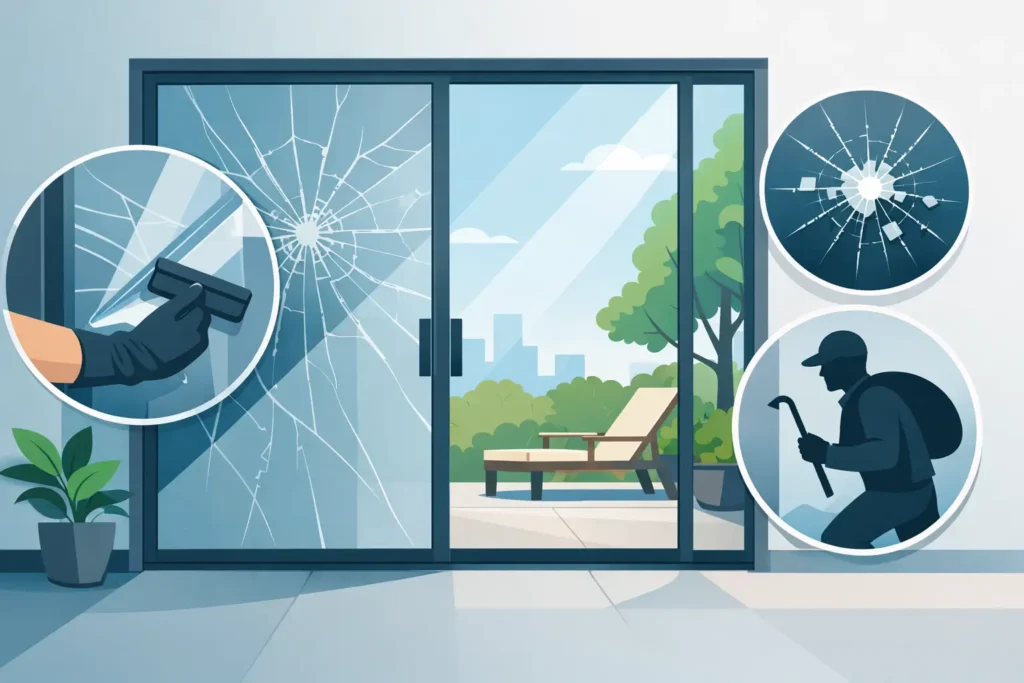
A glass door can be one of the best features in a home or workplace – until a hard impact, attempted break-in, storm-driven object, or simple accident turns it into a safety concern. Safety film for glass doors is designed to give existing glazing an extra layer of protection by helping broken pieces stay together rather than scattering across the floor.
For Sydney homeowners, office managers, and business owners, that can mean less disruption, a safer environment, and a more secure-looking property without replacing perfectly good glass. The right film is clear, professionally fitted, and selected for the door, the glass type, and the level of protection you need.
What safety window film actually does
Safety window film is a thick, transparent polyester film bonded to the inner surface of glass with a strong adhesive. When glass breaks, the film helps retain the fragments in a single sheet. It does not stop every pane from cracking or breaking, but it can greatly reduce the dangerous spray of sharp shards that follows an impact.
That distinction matters. Standard glass can fail suddenly, leaving loose pieces around a doorway, entry, or busy work area. A quality safety film is intended to hold that broken glass together long enough to reduce immediate risk and make cleanup, repair, and temporary securing of the opening more manageable.
It can also slow down forced entry. An intruder may still be able to break the glass, but retained fragments create an additional obstacle. Instead of an opening being immediately clear after one impact, more time and effort may be required to gain access. For a street-facing storefront, office entry, or residential sliding door, those extra moments can be valuable.
Where safety film for glass doors makes the biggest difference
Glass doors sit in high-traffic areas and are regularly exposed to accidental contact. Sliding patio doors, hinged entry doors with glass panels, French doors, office partitions, retail frontages, and internal glass doors can all be suitable candidates, provided the film is matched to the glazing correctly.
At home, safety film is often chosen for doors that open to pools, patios, balconies, and entertaining areas. Children, pets, furniture, sports equipment, and heavy foot traffic all increase the chance of an accidental impact. Film can be especially worthwhile where a door is close to a play area or where broken glass would create a difficult cleanup situation.
For businesses, the priorities are often different. A shopfront or office entry may need better protection against vandalism, smash-and-grab attempts, or accidental damage during deliveries. Medical practices, schools, hospitality venues, and strata-managed buildings may also use safety film to improve occupant protection without changing the clean appearance of their existing doors.
The visual result does not have to be heavy or dark. Clear safety film maintains natural light and visibility, while tinted, solar, or frosted options may be appropriate where heat, glare, privacy, or branding are part of the brief. A professional consultation helps determine whether a combined film solution is practical for your glass.
Safety film is not the same as security glass
Safety film is a practical upgrade, but it should be chosen with realistic expectations. It is not a replacement for laminated safety glass, toughened glass, secure frames, quality locks, alarms, or sensible access control. Its role is to improve the way a pane performs when it breaks.
The result depends on several variables: the thickness of the film, the existing glass, the condition of the frame, the size of the panel, and the force of the impact. A thin film intended mainly for UV control will not provide the same level of fragment retention as a purpose-made safety film.
For higher-risk locations, the installation method is equally important. Some applications may benefit from an attachment system that helps secure the filmed glass to the frame. This can improve retention after breakage, particularly on larger panels. Whether it is needed depends on the door design and the performance outcome required.
If your concern is compliance, it is also worth having the existing glazing assessed. Certain doors and side panels may need safety glass under building requirements, and applying film does not automatically make unsuitable glass compliant in every situation. An experienced installer can explain the options, while a qualified building or glazing professional can advise where formal compliance is required.
Choosing the right film for the door and the risk
The best choice starts with how the door is used. A quiet internal office door has different demands from a ground-floor retail entrance or a large sliding door facing a busy backyard.
A professional assessment should consider the glass type first. Toughened, laminated, annealed, insulated, and coated glass all respond differently to film. Applying the wrong product to certain glass can create unnecessary heat stress or affect the glass warranty, particularly where solar-control films are involved. This is why a premium installation is more than choosing the thickest film on a sample board.
Next, consider the likely hazard. If your main concern is accidental breakage, a clear safety film may be the cleanest solution. If break-ins are the issue, a thicker security-focused film and a frame attachment method may be more suitable. If the doorway receives harsh afternoon sun, a combined safety and solar-control solution could improve comfort while also helping protect the glass occupants and nearby furnishings from UV exposure.
Appearance still matters. Homeowners may want a near-invisible result that preserves a view, while an office might prefer a subtle tint to reduce glare in meeting rooms. Retailers may choose a film that supports both safety and a more polished storefront. The strongest recommendation is the one that balances performance, appearance, and budget rather than overselling protection you do not need.
Why professional installation matters on doors
Doors are less forgiving than a small fixed window. They move, they have handles and hardware, and they are often viewed up close every day. Clean edges, accurate trimming, and careful preparation make a noticeable difference to the final finish.
Before installation, the glass should be inspected for chips, scratches, failed seals, and existing damage. The installer will also check access around frames, door handles, locks, and seals. Dust, moisture, and poor surface preparation can compromise adhesion, so a controlled, methodical process is essential.
During installation, the film is precisely cut, applied using a professional mounting solution, and squeegeed to remove excess water and air. Some temporary haze or small water pockets can appear while the film cures. This is normal, and cure times vary according to the film, weather, and glass conditions.
Premium materials and skilled workmanship help prevent common issues such as lifting edges, contamination, uneven finish, or film that interferes with door operation. At Prestige Tinting, the focus is on tailored recommendations and flawless finishes, so the finished door looks as though the protection was part of the original design.
Care and maintenance after installation
Once the film has cured, caring for it is straightforward. Use a soft, clean cloth or rubber squeegee with a mild, non-abrasive cleaning solution. Avoid rough pads, blades, ammonia-heavy products, and aggressive scrubbing around the edges.
If a filmed pane breaks, do not assume it is safe to handle simply because the fragments are held together. Keep people away from the area, secure the doorway if possible, and arrange professional glass repair. The film may have reduced scattering, but the damaged panel still needs to be treated carefully and replaced.
A smarter way to protect the glass you already have
Replacing doors solely for extra protection can be expensive and disruptive. Safety film offers a practical middle ground for many properties: it improves fragment retention, can add a delay against forced entry, and preserves the light and style that made glass doors appealing in the first place.
The best outcome comes from looking at the whole doorway, not just the pane. When the film, glass, frame, locks, exposure, and intended use are considered together, you can make a confident investment in protection that looks right and works hard every day.
-
FAQs
1. What does safety film do to glass doors?
Safety film helps hold broken glass fragments together after an impact, reducing the chance of sharp pieces scattering across the surrounding area. It does not prevent glass from breaking, but it can improve fragment retention and make cleanup and securing the area more manageable.
2. Can safety film prevent a glass door from breaking?
No. Safety film is not designed to make glass unbreakable. Its purpose is to improve the way the glass behaves when it breaks. For higher-risk applications, laminated safety glass, stronger frames, locks, alarms, or other security measures may also be appropriate.
3. Can safety film be installed on sliding and hinged glass doors?
Yes, many sliding and hinged glass doors can be treated with safety film, provided the film is compatible with the existing glazing. The glass type, panel size, frame condition, hardware, and intended level of protection should be assessed before installation.
4. Is clear safety film noticeable on a glass door?
Clear safety film is designed to provide protection while maintaining the appearance, natural light, and visibility of the existing glass. Tinted, frosted, or solar-control safety films are also available when privacy, glare reduction, or heat control is required.
5. Does safety film make glass doors more secure against break-ins?
It can make forced entry more difficult by helping retain broken glass after impact, potentially creating an additional obstacle for an intruder. However, it should not be considered a complete security system. For higher-risk locations, safety film can be combined with suitable locks, alarms, cameras, reinforced frames, or other security measures.