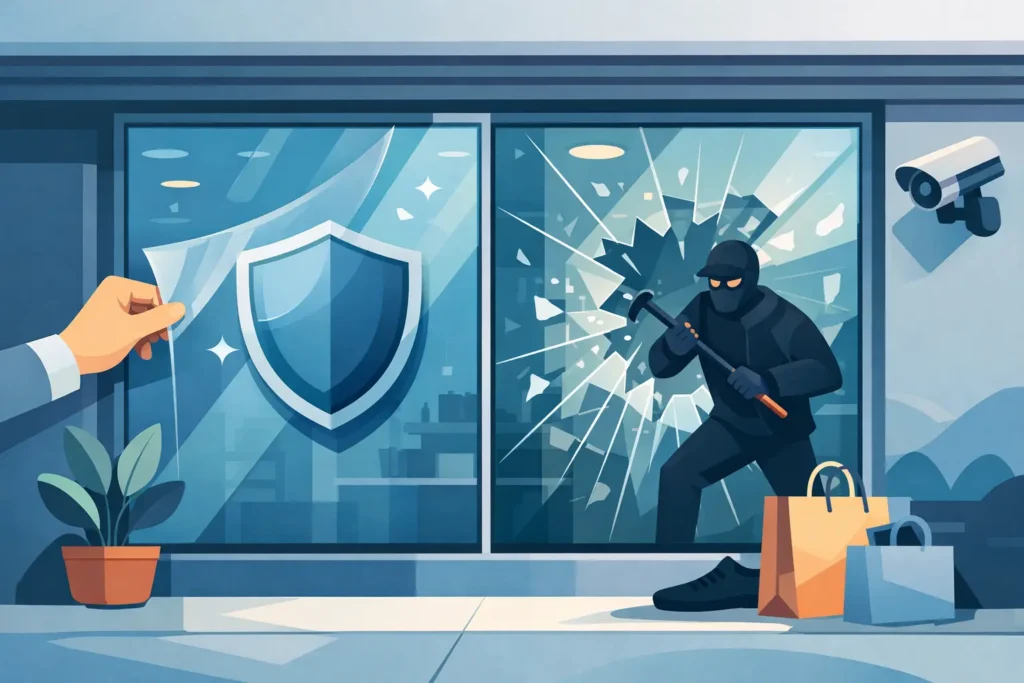
A shattered shop window creates more than a repair bill. It can interrupt trading, expose stock, unsettle staff, and leave customers questioning whether the premises are safe. Security film for shopfront windows is a practical way to strengthen existing glass without changing the clean, welcoming look that good retail frontage depends on.
For businesses with street-facing glazing, the goal is rarely to make a window indestructible. It is to make forced entry slower, messier, and less appealing while reducing the danger of flying glass. When matched to the glass, frame, and risk level of the site, professionally installed security film can add meaningful protection at a far lower cost than replacing every pane with specialized security glass.
What Security Film Does for a Shopfront
Security window film is a clear, heavy-duty polyester film applied to the inside surface of glass. Its strong adhesive bonds to the pane and helps retain broken fragments when an impact causes the glass to crack or shatter.
That matters in several situations. A would-be intruder may break the glass but find it remains held in place rather than falling away immediately. An accidental impact from a trolley, street furniture, or a customer can be less likely to send glass across the sales floor. During vandalism or severe weather, the film can also reduce the spread of dangerous shards.
The key benefit is delay. Most break-ins rely on speed. If an offender cannot quickly create an opening large enough to enter or remove high-value items, the added resistance may be enough to discourage the attempt or allow more time for an alarm response.
Security film is not a replacement for every security measure. A determined intruder with time, the right tools, and no risk of interruption may still gain entry. But as part of a considered security plan, it improves the performance of a vulnerable part of many retail properties: the glass.
Where Shopfront Security Film Makes the Most Sense
Street-level businesses with broad glazed fronts are obvious candidates, particularly jewelry stores, electronics retailers, pharmacies, boutiques, salons, galleries, and offices with valuable equipment near windows. Yet the need is not limited to high-value retail.
Cafes and restaurants may use security film to reduce injury risks from accidental breakage near entrances and outdoor seating. Medical practices and professional offices may want greater protection for reception areas, private records, or ground-floor equipment. Shopping center tenants can benefit where an attractive open frontage is required but the premises remain exposed after hours.
The right solution depends on the glass itself. Standard annealed glass, tempered glass, laminated glass, insulated units, and older shopfront systems behave differently under impact. Frame condition also matters. If a pane is retained by weak or damaged frames, film alone may not deliver the level of protection the business expects.
Clear Protection Without Closing Off the Store
Many business owners worry that a security upgrade will make their storefront look dark, industrial, or uninviting. Clear security film is designed to keep the glass looking much the same while adding strength and fragment retention.
This makes it particularly useful for retailers that rely on window displays and natural light. Customers can still see products, signage, and the activity inside. The space retains its polished presentation during the day, while the glass is better prepared for an after-hours incident.
Tinted or solar-control safety films may also be an option where heat, glare, fading, and privacy are part of the brief. These films can improve comfort and reduce harsh sun exposure while providing a degree of safety performance. However, not every solar film offers the same impact resistance as a dedicated security film, so the specification should be based on the primary risk rather than appearance alone.
Security Film vs. Safety Glass and Shutters
Every property has a different risk profile, so there is no single answer for every shopfront. Security film is often the sensible middle ground when the existing glazing is in good condition and the business needs an efficient upgrade without a major renovation.
Replacing glass with laminated safety glass can provide a higher level of protection in some applications. It may be the better choice for new builds, major refurbishments, or sites with strict compliance requirements. The trade-off is cost, lead time, and disruption. Replacing large sections of shopfront glazing can affect trading and require additional work to frames and fittings.
Roller shutters and security grilles can offer visible deterrence, but they also alter the exterior presentation of the business. Some retailers do not want to conceal their window displays or create a closed-off appearance after hours. They can also be impractical where planning rules, lease conditions, or building design limit exterior alterations.
Security film is discreet and can be installed from the inside, usually with minimal interruption to normal operations. It is not designed to compete with every high-security system. It works best alongside quality locks, monitored alarms, cameras, suitable lighting, and good stock placement.
Choosing the Right Security Film for Shopfront Windows
Film thickness is one consideration, but it should not be the only one. A quality installation starts with an assessment of the glass type, dimensions, frame system, and likely threat. A film that is appropriate for accidental breakage may not be the right choice for smash-and-grab concerns.
The method used to secure the film at the edges is equally significant for higher-risk applications. In some cases, a structural attachment system is used to anchor the film to the frame. This can help the filmed glass remain in place for longer after impact. Whether that approach is appropriate depends on the existing glazing system and the protection level required.
A professional installer should also discuss visibility. Clear film is ideal when preserving an unrestricted view is the priority. Where strong western sun affects a display or creates uncomfortable glare at the counter, a carefully selected solar safety film may offer a better all-around result. The best choice is the one that addresses the actual daily conditions at the premises, not simply the thickest film available.
Why Professional Installation Changes the Result
Security film has to bond consistently across the entire pane to perform as intended. Dust, residue, moisture, incorrect trimming, or poor edge finishing can affect appearance and long-term adhesion. On a prominent shopfront, flaws are especially noticeable in direct light and can undermine the professional image of the business.
Experienced installers prepare the glass carefully, use premium materials suited to commercial applications, and finish edges with precision. They can also identify issues that should be addressed before installation, such as chipped glass, failed seals, damaged frames, or existing film that needs to be removed.
For businesses, scheduling matters too. Installation can often be planned around quieter trading periods to keep disruption low. At Prestige Tinting, the focus is on tailored recommendations and flawless finishes, so the completed film supports both security and the presentation of the premises.
Important Limits to Understand
Security film helps retain glass, but it does not turn ordinary windows into a solid wall. It cannot prevent every breakage, and it does not repair damaged panes or compensate for poor locks and weak door hardware. If there is an immediate concern about repeated attacks, extensive structural damage, or a known high-threat environment, a broader security assessment is the right next step.
It is also worth checking building requirements, landlord conditions, and insurance expectations before work begins. Some commercial leases specify approved alterations, while certain insurers may recommend particular glazing standards for high-value stock. A professional assessment can help clarify whether film is the appropriate solution or one part of a larger upgrade.
Getting Long-Term Value From Your Installation
Once installed, security film needs little day-to-day attention. Use a soft cloth or rubber squeegee with a mild cleaning solution after the recommended curing period. Avoid abrasive pads, harsh powders, and sharp tools that can scratch the surface or lift an edge.
Inspect the shopfront periodically, especially after impacts, building works, or severe weather. If the glass cracks, the film may have done exactly what it was meant to do by holding the pane together. The area should still be made safe and assessed promptly, since a damaged pane will require replacement even if it remains temporarily intact.
A well-presented storefront should invite people in, not advertise its vulnerabilities. The right security film gives your glass a quieter kind of strength: protection that supports your staff, stock, and business image without taking attention away from what you sell.
FAQs
1. What does security film do for shopfront windows?
Security film is a heavy-duty film applied to the inside of glass that helps hold shattered glass fragments together after an impact. It can reduce the spread of dangerous shards and make it more difficult for an intruder to quickly create an opening through a broken window.
2. Can security film prevent a shop window from being smashed?
No. Security film does not make glass indestructible. Its purpose is to improve glass retention and potentially slow forced entry rather than guarantee that a window cannot be broken. For higher-risk premises, it should be considered alongside alarms, cameras, locks, lighting, and other security measures.
3. Is security film visible once it is installed?
Clear security film is designed to preserve the existing appearance of the glass while providing added protection. This makes it suitable for retail businesses that want to maintain natural light, window displays, and an open storefront without installing visibly heavy security measures.
4. Is security film suitable for all types of shopfront glass?
Not necessarily. The existing glass, frame system, pane size, condition, and security requirements all need to be assessed. Tempered, laminated, annealed, insulated, and older glazing systems can respond differently to impact and film application, so professional assessment is recommended.
5. Does security film replace roller shutters or laminated security glass?
Not in every application. Security film can be a practical upgrade where the existing glazing is sound and the business wants discreet additional protection. Higher-risk premises may require laminated security glass, shutters, structural attachment systems, or a combination of measures. The appropriate solution depends on the property’s specific security requirements.