
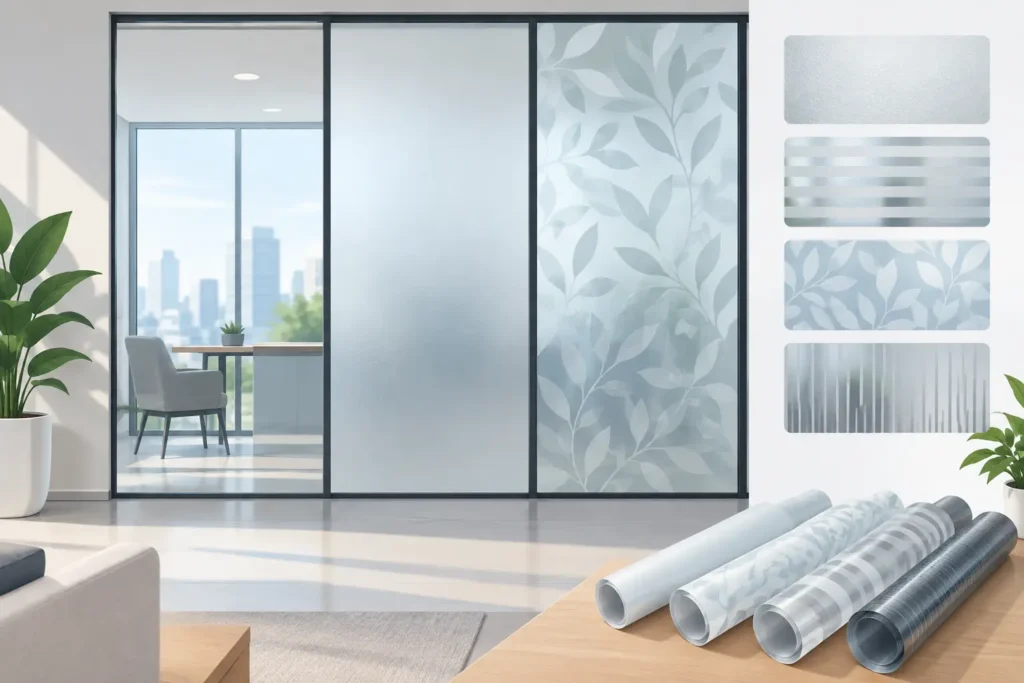
A bare glass panel can make a room feel open, but it can also put everyday life on display. A well-chosen decorative film changes that balance without blocking natural light or committing you to costly etched glass. This guide to decorative glass films explains how patterned, frosted, and privacy films can improve the look and function of windows, doors, partitions, and other glazed surfaces.
Decorative film is often seen as a design detail, yet its practical value is just as important. It can create privacy in a street-facing bathroom, define meeting rooms in an office, soften harsh visibility through a front door, or give a commercial fit-out a more polished finish. The right result depends on the glass, the level of privacy required, the light in the space, and the quality of the installation.
What Are Decorative Glass Films?
Decorative glass films are thin, durable materials applied to the interior surface of glass. They are available in frosted, matte, translucent, patterned, colored, gradient, and custom-printed finishes. Once professionally installed, they give existing glass a new appearance without the disruption of replacing the panel.
Frosted film is one of the most popular choices because it obscures direct views while allowing daylight to pass through. However, decorative film is not limited to a plain frosted look. Subtle stripes can add privacy to office partitions while keeping rooms visually connected. A geometric pattern can turn a plain entryway into a design feature. A gradient film can provide coverage where people need it most while retaining a clearer view above or below.
For homeowners and business owners, this flexibility is the main advantage. You can tailor the finish to the purpose of the room instead of accepting the all-or-nothing effect of curtains, blinds, or permanently etched glass.
Where Decorative Film Makes the Biggest Difference
Decorative films work best where glass serves a useful purpose but feels too exposed, too plain, or too visually busy. In homes, common applications include front doors, sidelights, bathroom windows, shower screens, internal doors, balcony glass, and glass panels facing close neighbors.
In offices, decorative frosting is especially effective on boardroom walls, meeting-room doors, reception areas, and glazed partitions. It gives staff privacy for conversations and focused work while keeping the workplace brighter and more open than solid walls would. A carefully placed band or logo treatment can also improve wayfinding and strengthen a professional brand presentation.
Retail, hospitality, health care, and commercial properties can use decorative films to control sightlines, create a refined storefront appearance, or divide functional areas. For example, a clinic may need privacy at eye level but still want daylight in waiting rooms. A restaurant may want to soften views into service areas without making the interior feel closed off.
The finish should reflect how the space is used. A bathroom normally benefits from fuller coverage, while an office partition may only need a frosted band across the center. This is why an on-site assessment is valuable: the same film can look and perform very differently depending on orientation, surrounding light, and viewing distance.
Choosing the Right Decorative Glass Film
A decorative film should look intentional, not like an afterthought. Before selecting a pattern or opacity, consider what you need the glass to do every day.
Privacy level and viewing angles
Not all frosted films provide the same privacy. A lightly translucent finish may blur details but still reveal movement and silhouettes, particularly at night when interior lights are on. A denser matte or opaque film offers greater screening, although it may reduce the visual openness of the space.
Think about where people stand when looking through the glass. A front entry may need full-height coverage, while a conference room may only require privacy from a corridor at seated or standing eye level. A horizontal frosted band can be a clean, practical solution in commercial spaces where visibility above and below the band remains useful.
Light transmission
One of the strongest reasons to choose decorative film is that it can preserve natural light. Even so, denser films and darker colors reduce light transmission more than subtle patterns or etched-style finishes. In a naturally dark hallway or a room with limited windows, a light frosted film is usually the better choice.
If glare or heat is also a concern, decorative film alone may not be enough. Solar window film is designed specifically to reduce heat, glare, and UV exposure. In some settings, the best approach is a decorative privacy treatment on selected glass and a solar-control solution where sun exposure is the primary issue.
Style and consistency
The most successful installations work with the building rather than competing with it. Clean frosted finishes suit contemporary homes, clinics, and professional offices. Fine lines and restrained patterns can complement modern interiors. Bolder geometric designs, colored accents, or custom graphics may be appropriate for retail spaces, creative studios, and branded commercial environments.
Consistency matters when several glass panels are visible together. Matching the opacity, pattern placement, and alignment across doors and partitions creates the flawless finish that makes a property feel considered and well maintained.
Durability and maintenance
Premium decorative films are made for long-term indoor use, but their performance depends on the material, the condition of the glass, and correct application. Quality film should resist peeling, bubbling, and discoloration when installed and maintained properly.
Most decorative films are easy to care for. After the installation has cured, they can generally be cleaned with a soft cloth and a mild, non-abrasive cleaner. Avoid rough scrubbers, razor blades, and harsh chemicals that may scratch or damage the film surface. An experienced installer can provide clear aftercare advice for the specific product used.
Decorative Film Compared With Etched Glass and Blinds
Decorative film is often compared with etched glass because the finished appearance can be remarkably similar. The difference is flexibility. Etching permanently alters the glass and usually requires removing or replacing the panel. Film can be installed with far less disruption and can be updated later if a renovation, tenancy change, or new design direction calls for it.
Blinds and curtains provide adjustable privacy, but they need regular cleaning and can block daylight or make a room feel smaller. Decorative film offers constant privacy with a cleaner, more architectural result. It is particularly useful on narrow windows, glass doors, and partitions where window coverings would be awkward.
There are trade-offs. Film does not provide the adjustable openness of blinds, and even opaque decorative finishes do not replace a true security solution. Where glass breakage or forced entry is a concern, safety window film should be assessed separately. It can help hold shattered glass together, but the right product and installation method depend on the risk, glass type, and site requirements.
Why Professional Installation Matters
Decorative glass film is unforgiving of shortcuts. Dust, fingerprints, uneven cuts, trapped moisture, and poor alignment are highly visible, especially on large panels or minimalist frosted finishes. Professional preparation and installation are what turn a good product into a top-quality result.
An expert team begins by inspecting the glass, measuring accurately, and confirming which side of the panel should receive the film. They will identify obstacles such as handles, seals, frames, and existing damage that may affect the finish. On patterned or striped designs, precise alignment is essential across adjacent panels.
Professional installers also use premium materials selected for the application rather than relying on generic, one-size-fits-all products. This matters for appearance, adhesion, longevity, and how the film responds to regular cleaning and changing indoor conditions. For Sydney homes and businesses, Prestige Tinting can recommend a finish that suits the privacy, style, and practical demands of the space.
A Clearer Way to Improve Glass
Decorative film is a practical upgrade for glass that feels too exposed, too plain, or out of step with the rest of a property. It can add calm to a home, discretion to a workplace, and a more polished finish to customer-facing spaces without sacrificing the daylight that makes glass valuable in the first place.
Start with the view you want to soften, the privacy you genuinely need, and the atmosphere you want people to feel when they enter the room. From there, the right decorative film can make the glass work harder while looking like it was always meant to be there.